

AIFX: Creation Records vs. Rights Review

What you’ll learn
- How AIFX and AIFI keep a finished image, creator, AI system, creation time, and file-comparison value together
- Why a creator-provided record, a file-change check, usage rights, and release approval require separate decisions
- Why an AIFX record does not prove identity, contract validity, or permission to release the work
- How to connect creation records and internal reviews to the same
asset_idandasset_version, then stop release when evidence is missing
AIFX Packages an AI-Created Asset with Its Creation Records
AIFX is a public set of rules for transferring an AI-created image or video together with information about how it was made. Its image format, AIFI, puts the image and its creation record into one ZIP file, a format that bundles several files for storage and handoff. A creator-provided record, confirmation that the file has not changed, usage rights, and human release approval are still four different decisions.
By the end of this article, you will have practical criteria for answering “How much of AI asset creation records and rights review can be structured, and where must people still decide?” in your own context.
AIFI Keeps the Image and Its Creation Record in One Transfer Package
AIFI requires an image and manifest.json. The manifest.json is a fixed list of details such as who created the image, when it was created, and which AI system was used. It can also include the prompt (the instruction given to the AI), the model (the AI system and version), and the license (the permitted uses).
A cryptographic hash checks whether the file has changed. It is a comparison value derived from the file’s contents, so its value changes when the contents change.[1][2]
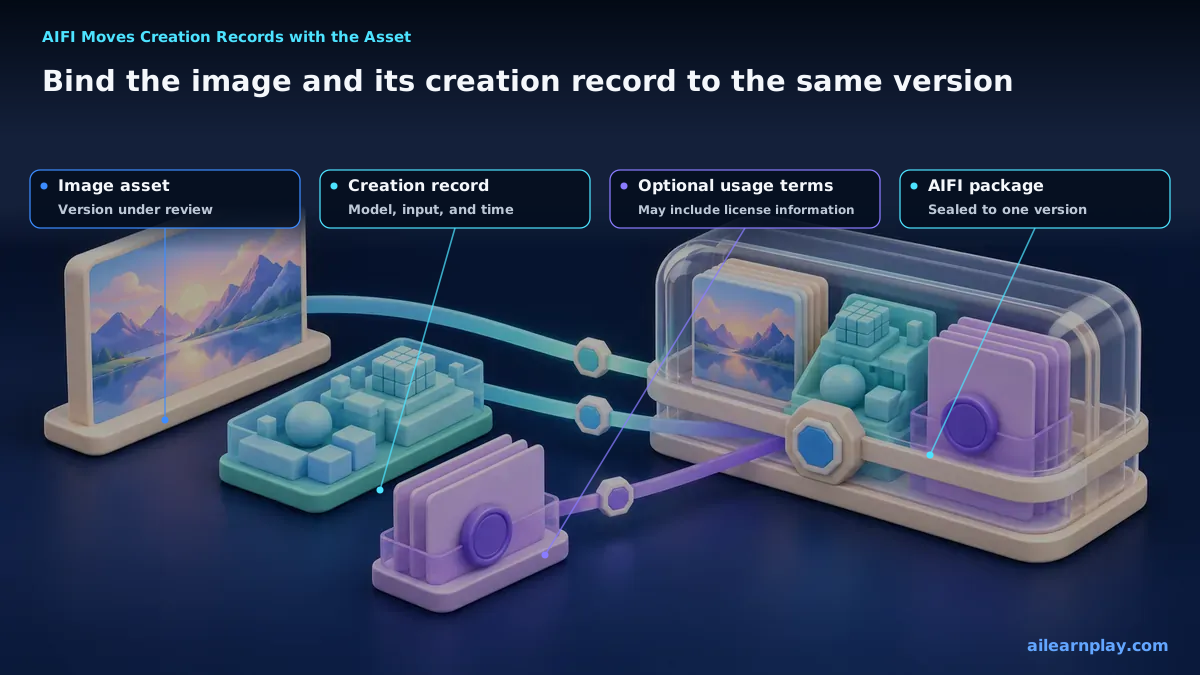
When an image and its tracking sheet are stored separately, copying, conversion, and supplier handoffs can break their relationship. One package keeps the final image and creation record under the same management number and version. Checking software can then confirm required fields and hash consistency mechanically.[1]
Saving every instruction given to the AI in full is not always appropriate. It may contain customer data, unreleased product details, or internal instructions. Store the full instruction where only named people with a work reason can read it. In the package, record where it is stored, a short summary, who may view it, and when it must be deleted.
Check Creator-Provided Records, File Changes, Usage Rights, and Release Approval Separately
AIFX uses the official term Self-Declared Authorship for authorship information entered by the creator. This record does not establish copyright, prove originality or identity, detect and remove unacceptable content, or stop prohibited use.[1]
A creation record therefore does not establish that the organization has the right to use an asset.
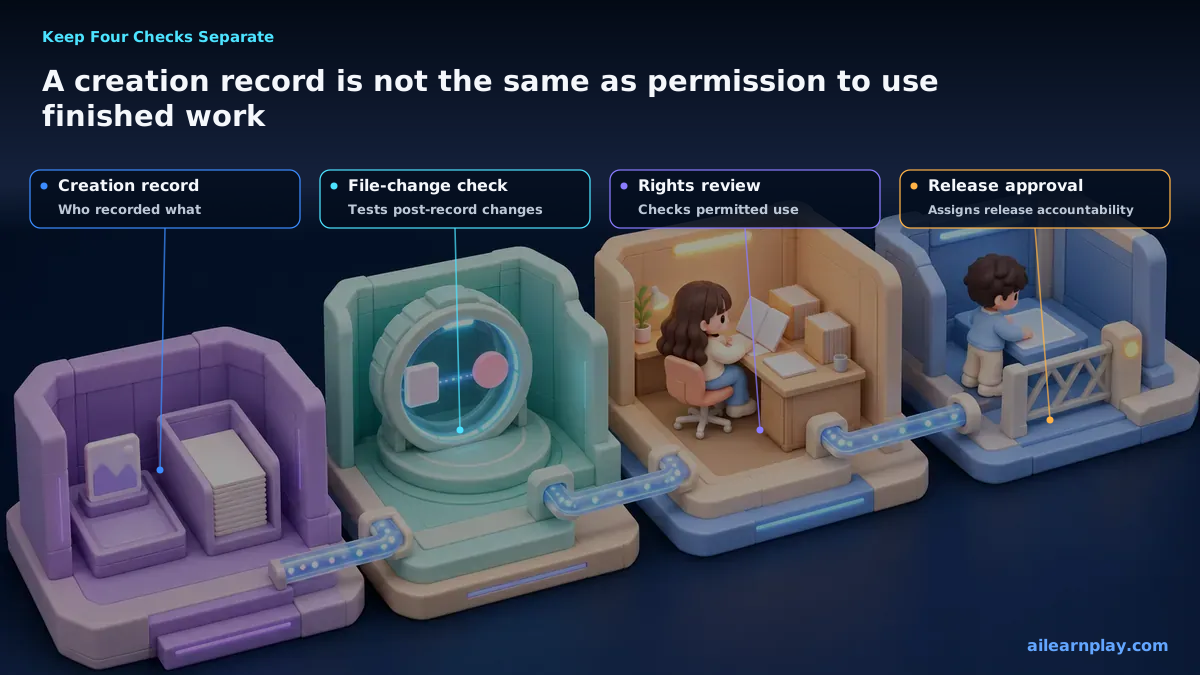
The four checks below separate what AIFX records from the decisions that remain with the organization. They were created for this article and are not an official AIFX classification.
| Type of check | Question | Main evidence | Decision owner | Problem addressed |
|---|---|---|---|---|
| Creation record | Who recorded how the work was made and under which conditions? | Creator, model, time, instructions and source material | Creator or production owner | A record remains without showing who entered it |
| File-change check | Has the file changed since the record was made? | Hash, revision number, check result | File-checking software and the person responsible for file checks | A file is replaced or edited without detection |
| Rights review | May the source material and finished work be used for the intended purpose? | Contracts, consent, permitted-use terms, checks of the person or organization that owns the rights | Legal or rights owner | Material is used without permission or outside the allowed purpose |
| Release approval | May the work be released for this brand and use? | Review outcome, approver, usage limits | Brand or business owner | The work is released without accountable approval |
AIFX is strongest at keeping creator-provided records and checking whether a file changed. A package can carry permitted-use information, but it does not automatically prove that a contract is valid, the person who entered the record owns the rights, or consent to use a person’s likeness or voice covers the intended use. Rights review and release approval need separate records, responsible people, and stop conditions.
An AI Asset Evidence Packet Connects Creation Records and Internal Reviews to One Work
The following table connects AIFI information and internal review results to the same work. This article calls it an “AI Asset Evidence Packet.” It is an author-created organizational template, not part of AIFX’s published rules.
asset_id is the work’s management number, and asset_version identifies the revision under review. The owner column names the person who records or checks each item and prevents it from moving forward when evidence is missing.
| Item | Minimum record | Owner | Problem stopped | Action when missing |
|---|---|---|---|---|
| Work identification | asset_id, revision number, format, hash | Production manager | The wrong work or revision is used | Stop delivery and distribution |
| Creation context | AI service used, AI type and version, time, creator-provided record | Creative owner | Work with an unknown creation record proceeds | Recheck or restrict use |
| Inputs and references | Source material, references, where the AI instruction is stored | Creative owner and the person responsible for storing and maintaining the records | Unidentified source material is used | Stop release if origin is unknown |
| Rights material | Contract, permitted-use terms, consent to use a person’s likeness or voice, and the consent expiration date | Legal or rights owner | Work proceeds without checking permission or its expiration date | Send it to the rights specialist and hold use until review is complete |
| Usage conditions | Whether commercial use is allowed, the country or region where use is allowed, publication destination, modification, and reuse | Legal or rights owner | Use exceeds the approved scope | Do not use outside the allowed scope |
| File and record check | Required-field check, hash match, check time | File-checking software and the person who investigates failed file checks | An incomplete record or replaced file is delivered | Remove it from delivery and investigate the mismatch |
| Human decision | Brand, facts, whether the work’s words and images suit the people and place where it will appear, approver | Brand and business owners | Release proceeds without accountable approval | Do not release before approval |
| Next stage | Destination, decision on what to disclose publicly about AI use, saved record of who decided what | Distribution owner | Work moves with no responsible recipient or decision record | Hold when no responsible recipient exists |
The table separates a field that contains text from a checked conclusion. Text in a permitted-use field is not a completed rights review unless it maps to the contract, finished work, term, and permitted use. A file-and-record check result shows that the file is the same, not that its content is lawful or accurate.
Add a Shared Asset ID, a Creation-Record Location, and Stop Procedures to Existing Asset Management
Changing every finished work to a new format at once would increase creative workload and system changes before the organization knows whether the method is useful. Start with one type of externally published AI-generated image and add the following three elements to existing asset storage, project tracking, and approval systems.
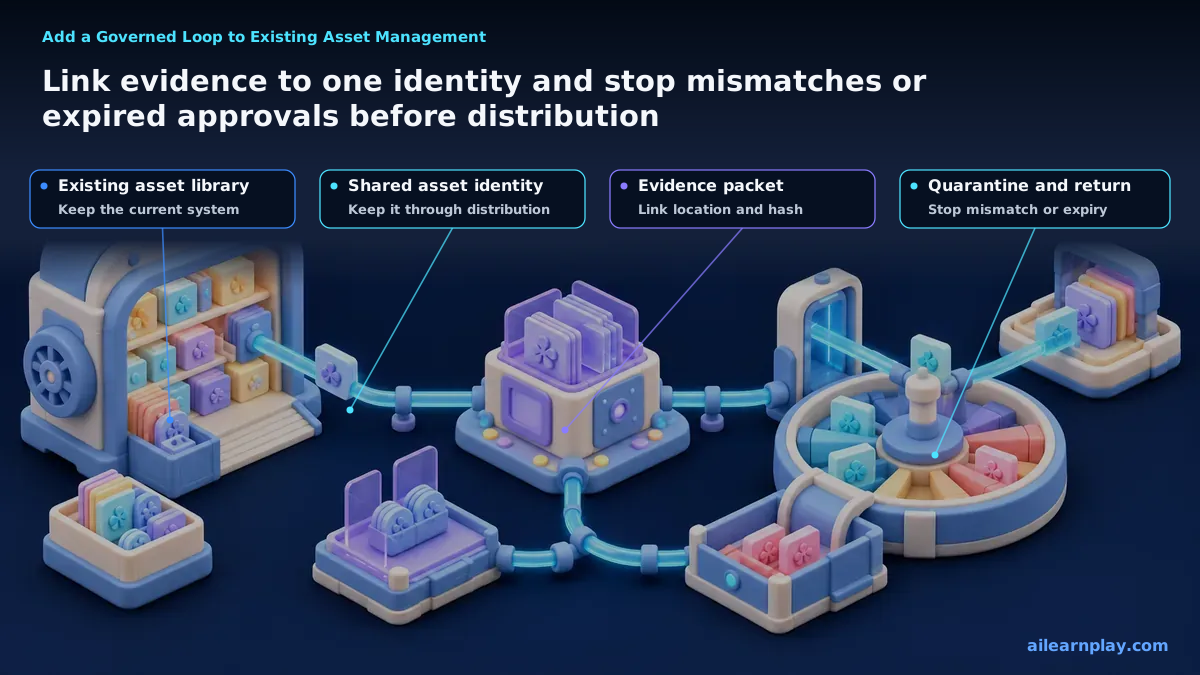
- Keep the same
asset_idand version from production through distribution - Record the evidence packet location and hash in the existing management record
- Define procedures that stop delivery for unknown rights, a file or record check that does not match, and expired approval
The AIFX implementation is under active development and warns that a newer change may prevent an older version from reading a file.[1] Long-term storage should therefore preserve the source work, creation-record file, checking-software version, and the procedure for moving old records into a new system instead of depending on one desktop application.
Summary: AIFX File-Change Checks Do Not Replace Human Usage-Rights and Release Decisions
AIFX and AIFI show how to move an AI-generated work and its creation record as one package with software-checkable information. The creator-provided record, the file-change check, legal rights review, and human release approval remain separate decisions.
For a pilot, create one AI Asset Evidence Packet before deciding whether to adopt AIFI broadly. Identify which fields can be captured automatically, which require specialist review, and who stops the asset when evidence is missing.
This article is a general information summary and is not legal advice. Confirm practical decisions with a qualified specialist.
References
- AI First Exchange, AI-First Exchange
- AI First Exchange, AIFI — AI First Image Format
For the latest releases and updates, check the official website and official documentation.