

Capability CI/CD: Verifying Agent Skills Before Distribution

What you’ll learn
- Why an Agent Skill should be managed as a versioned, distributable asset rather than a collection of instructions
- Which questions static checks, overlap detection, and live evaluation answer
- What signatures and internal catalogs can and cannot guarantee
- How to use a Capability Release Packet for a production distribution decision
Capability CI/CD Verifies an Agent Skill Before Distribution
Capability CI/CD automatically checks an Agent Skill after changes and distributes only an approved version to a named environment. On August 19, 2026, NVIDIA released SkillEvaluator to check Skill structure, safety, overlap, and practical effectiveness separately. Organizations that distribute Skills across multiple AI runtimes need one release decision that connects test results, required permissions, and approval conditions.
By the end of this article, you will have practical criteria for answering “What evidence should qualify an Agent Skill for production distribution, and who should approve it?” in your own context.
Structure Checks, Overlap Detection, and Live Evaluation Answer Different Questions
SkillEvaluator separates evaluation into three tiers. Tier 1 checks format, secrets, personal information, licenses, scripts, and safety. Tier 2 looks for semantic overlap with existing Skills. Tier 3 runs the same task with and without the Skill in isolated environments and measures the difference.[1][2]
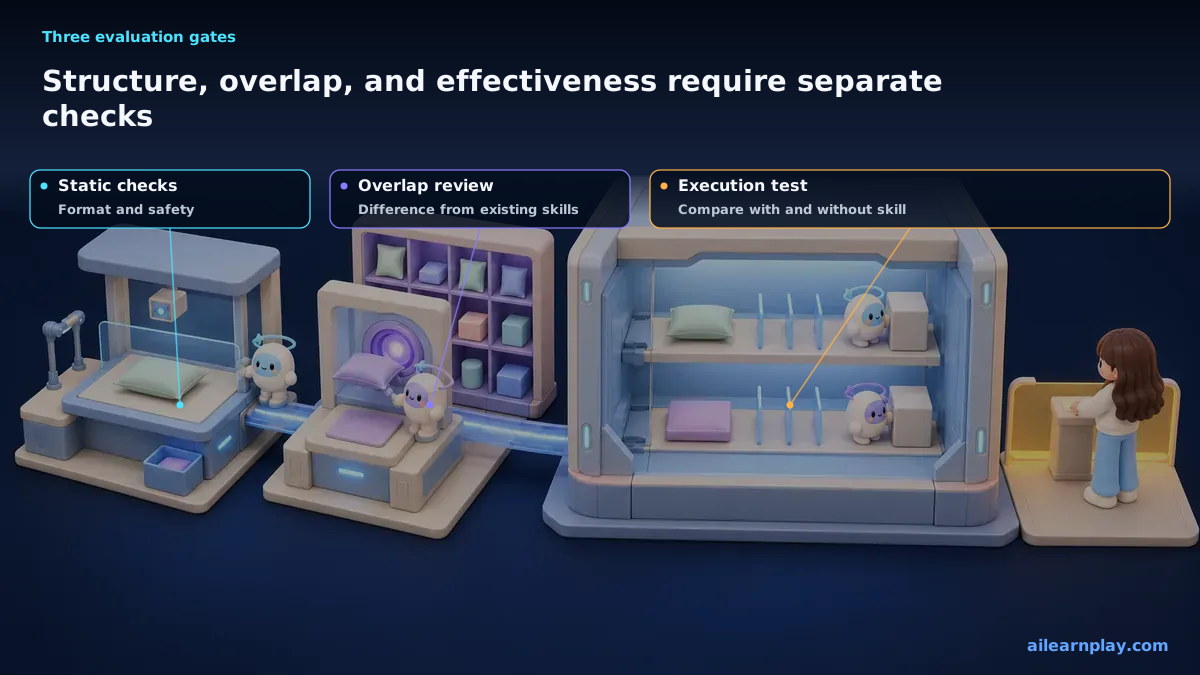
A well-formed Skill can still reduce answer quality after passing safety checks. Another Skill may improve correctness while requiring excessive permissions or exposing secrets. The three evaluation tiers surface these different failure modes before distribution.
NVIDIA reported higher average Correctness and Effectiveness scores after evaluating more than 300 Verified Skills across over 30 product families. Most tasks, however, were attempted only once or twice, and the post did not report confidence intervals.[1] A catalog-wide average is not proof that a particular Skill will improve a particular organization. The relevant comparison must use the organization’s inputs, expected results, and permissions.
Signatures and an Internal Catalog Track Source, Version, and Approval State
An evaluated Skill should be tied to its author, version, purpose, evaluation conditions, and approved environments. A cryptographic signature can show that content has not changed since signing and identify the signing party. It does not prove that business logic is correct or that every future input will be safe.[3]
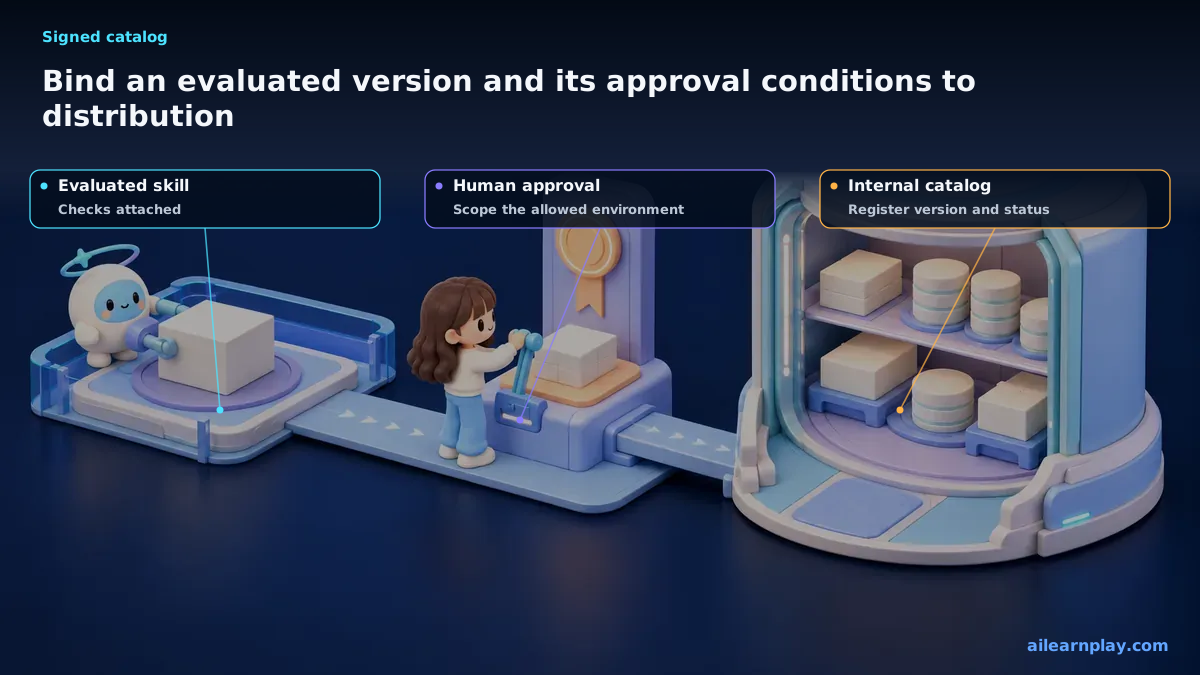
A catalog is both a discovery surface and a ledger of approval state. At minimum, it should record the owner, version, business use, permitted AI runtimes, required permissions, last evaluation date, expiry date, and retirement state. The goal is to let users select an approved internal version instead of installing from a GitHub URL alone.
The earlier SkillOps article treats creation, publishing, evaluation, and maintenance as one operating lifecycle. Capability CI/CD has a narrower purpose: change-level quality gates and the evidence needed to authorize production distribution.
A Release Decision Table Connects Test Results, Permissions, and Approval
A production decision should connect one Skill to its evidence instead of leaving scan results across unrelated screens. This article calls the minimum unit a Capability Release Packet. It is not a product name; it is a template for the information required for approval.
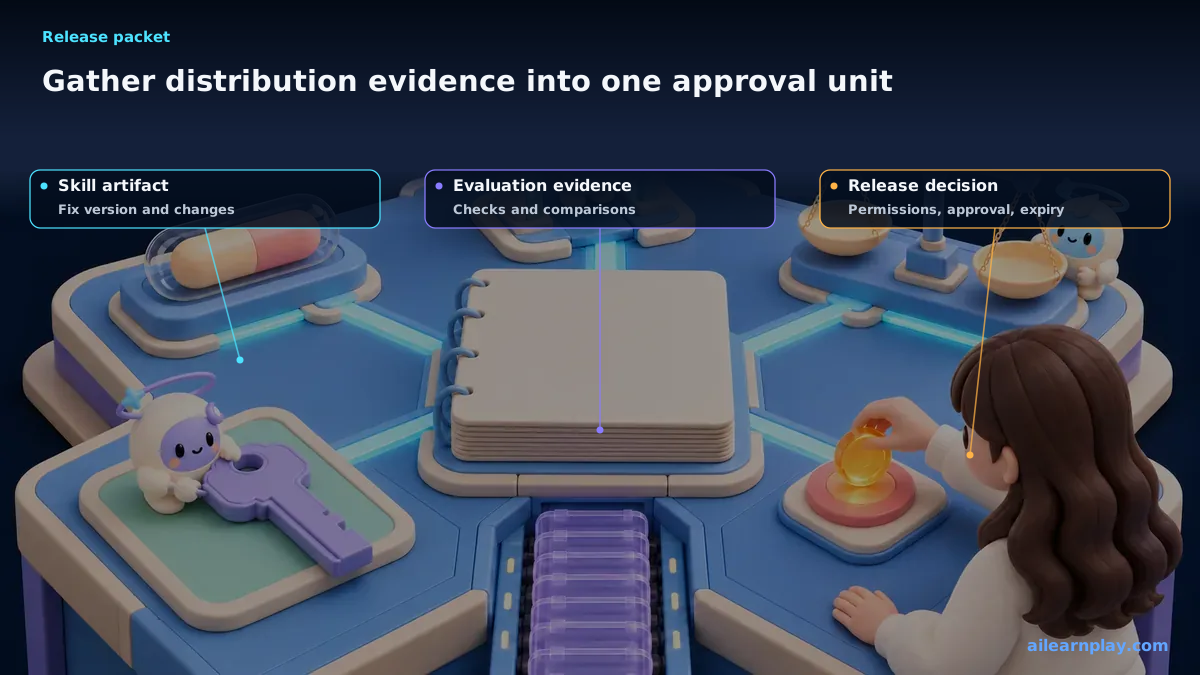
| Item | Record | Stop distribution when |
|---|---|---|
| Purpose and owner | Business task, users, maintenance owner | The purpose or owner is unknown |
| Change | Version, diff, dependencies | An executable file or destination is unreviewed |
| Static checks | Format, secrets, personal data, license, safety | A critical finding remains open |
| Overlap | Difference from existing Skills | The content should be merged into an existing Skill |
| Live evaluation | With/without-Skill correctness, workflow, cost, time | A critical metric falls below its threshold |
| Permissions | Data read or written, external connections, approval actions | Permissions exceed the stated purpose |
| Approval and expiry | Approver, environment, reevaluation date | Approval or expiry is missing |
More metrics do not automatically produce a better decision. A weekly reporting Skill may prioritize source use, missing critical items, numerical consistency, required format, and processing time. A Skill that changes user behavior or external systems should also include permissions, reversal, and human approval in its acceptance criteria.
Updates, Suspension, and Rollback Belong in the Distribution Path
A Skill can change behavior when an API, source document, AI model, or internal policy changes. Evaluation only at first release will not detect degradation after an update. A version change should update the same Release Packet and rerun the affected checks.
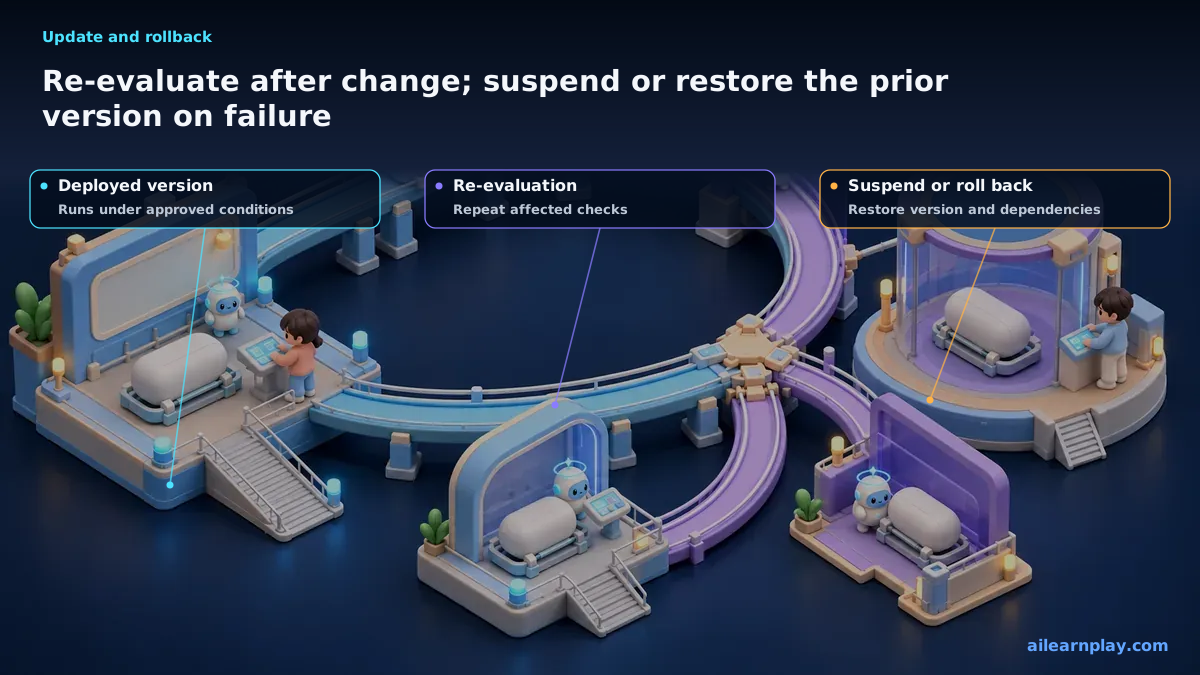
These states make operating decisions easier to distinguish:
- Draft: under development and unavailable to production runtimes
- Evaluating: undergoing checks and comparisons in isolation
- Approved: available in named environments with named permissions
- Suspended: blocked from new runs during an investigation
- Deprecated: moving to a successor and unavailable for new adoption
- Revoked: withdrawn because of a serious issue
A rollback needs more than the previous Skill files. It also needs compatible tools, permissions, and evaluation evidence. A stored signed file cannot restore previous behavior if the API it depends on has changed.
Lower-Risk Skills Can Start with Fewer Checks
Not every Skill needs the same review depth. A formatting Skill with no external connection or data mutation is different from a Skill that reads customer records and sends information to an external API.
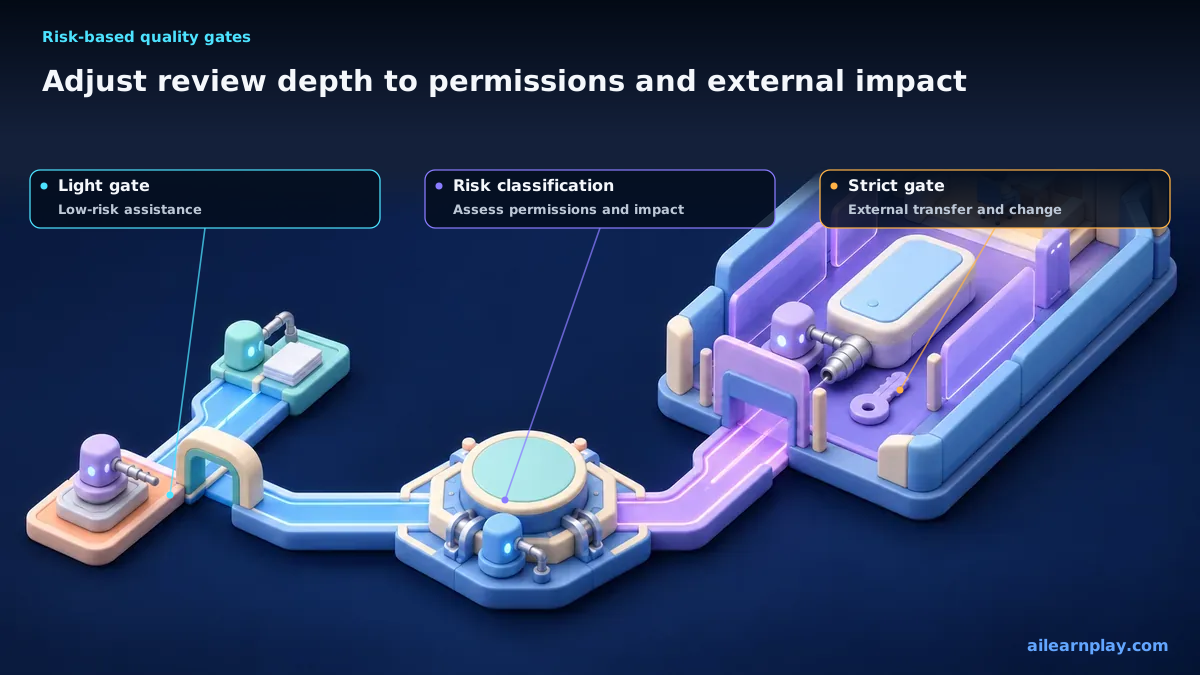
Start with one representative Skill and add static checks, a with/without-Skill comparison, owner approval, and a fixed version. Add stronger isolation, security review, more attempts, and a shorter expiry only when the Skill has broad permissions, external transmission, hard-to-reverse actions, or regulated data.
A scanner is supporting evidence, not an absolute safety certificate. Static analysis cannot reproduce every runtime input, external-service response, and permission combination. The decision should layer scan results, live evaluation, and accountable human review.
Summary: Start Skill Distribution Governance with a Capability Release Packet
Capability CI/CD checks an Agent Skill for structure, safety, overlap, and effectiveness, then attaches a version and approval conditions before distribution. SkillEvaluator brings static checks, overlap detection, and with/without-Skill live comparisons into one concrete evaluation path.
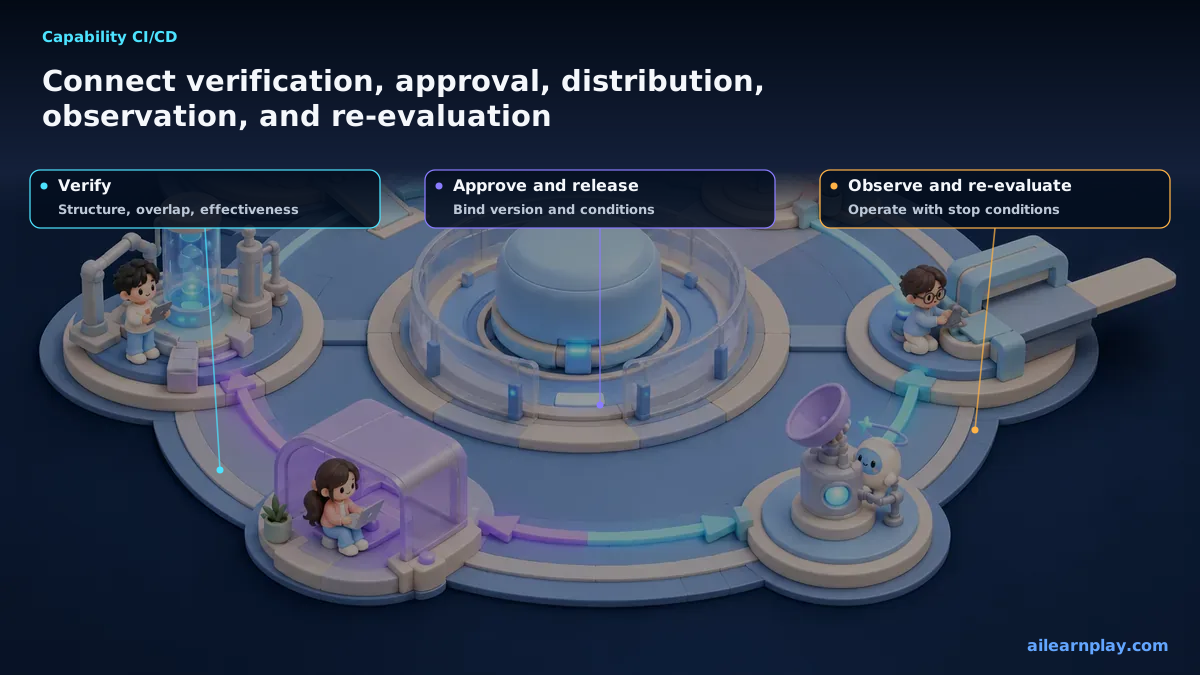
The first implementation can be one Capability Release Packet that records who approved which version, from which evidence, for which environment. Adding stop conditions and a reevaluation date makes adoption and withdrawal part of the same operating model.
References
- NVIDIA Technical Blog, Evaluating AI Agent Skill Performance with NVIDIA SkillEvaluator, August 19, 2026
- NVIDIA, SkillEvaluator
- NVIDIA, NVIDIA Agent Skills
For the latest releases and updates, check the official website and official documentation.