

Agent Observability Without Centralizing Conversation Content

What you’ll learn
- Why Zero Data Retention does not mean that every type of information is never stored
- How full-content logging creates another sensitive data store
- How to separate the path that handles conversation content from the path that handles safety signals
- How to use a checklist to minimize the telemetry fields collected
Agent Monitoring Can Separate Conversation Content from Safety Signals
Privacy-preserving agent monitoring keeps conversations and documents out of a central store while sending only the signals needed for safety decisions along a separate path. On August 19, 2026, OpenAI announced Private Safety Processing for eligible Zero Data Retention environments. It detects patterns across multiple interactions without OpenAI retaining prompts or model responses after processing. The capability was still in early customer testing, so it should not be treated as a generally available finished specification.
By the end of this article, you will have practical criteria for answering “How can an organization detect and investigate risky sequences without centrally storing conversation content?” in your own context.
Full-Content Logging Simplifies Monitoring but Expands the Protected Surface
Traditional agent monitoring often sends prompts, responses, tool calls, user identifiers, and timestamps into one logging platform. A tool call is a record of an agent using an external search, file, or API operation. The data is useful for diagnosis, but the logging platform may now hold the same confidential information as the source business system.
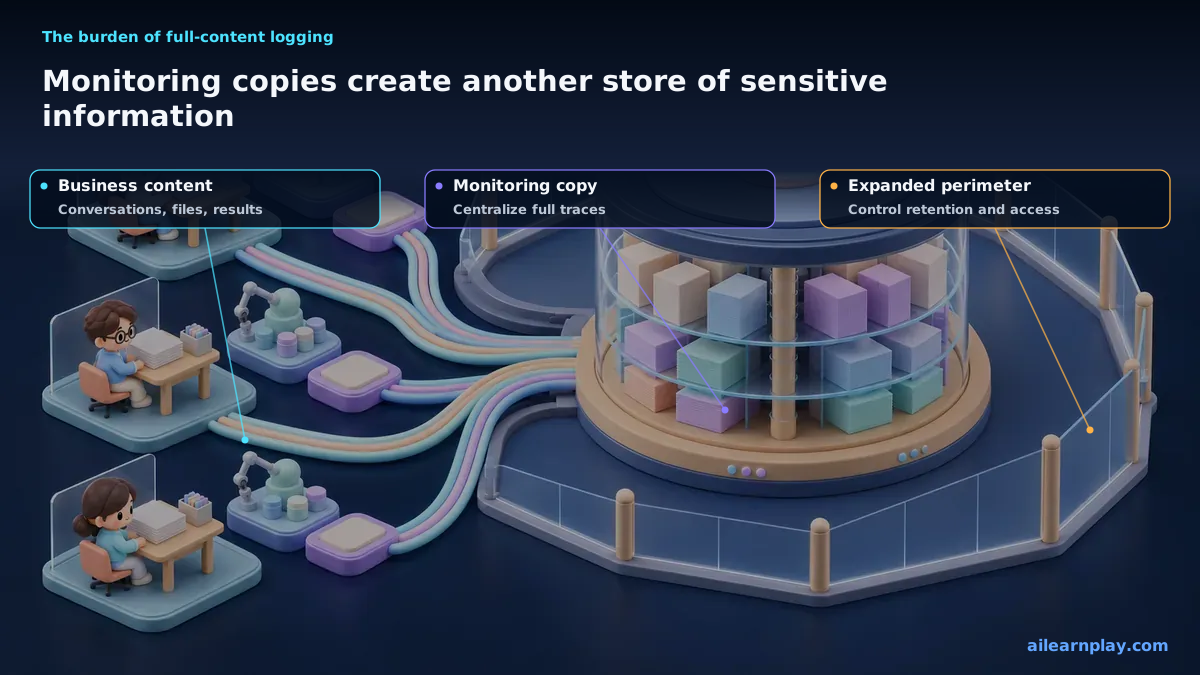
An M&A research agent, for example, may process unpublished financial statements, contract terms, and names of involved parties. Copying its full trace—the chronological record of processing—to an external monitoring service can simplify investigation while adding storage locations, viewers, deletion schedules, cross-border transfers, and vendor controls.
Official OpenAI documentation explains that abuse monitoring logs may normally be retained for up to 30 days and that approved customers can configure Zero Data Retention or Modified Abuse Monitoring.[1] Application state, which is stored to make a feature work, varies by API capability. Data sent to a third-party MCP server is also governed by that service’s retention policy.
Keep Conversations and Documents Separate from Safety Signals
Privacy-preserving agent observability does not remove monitoring. It separates content from the information needed to make a safety decision. This article calls the area handling prompts, documents, tool results, and responses the Content Plane, and the area handling safety classifications and control decisions the Safety Signal Plane. These are editorial architecture terms derived from the announced design, not official OpenAI product names.[2]
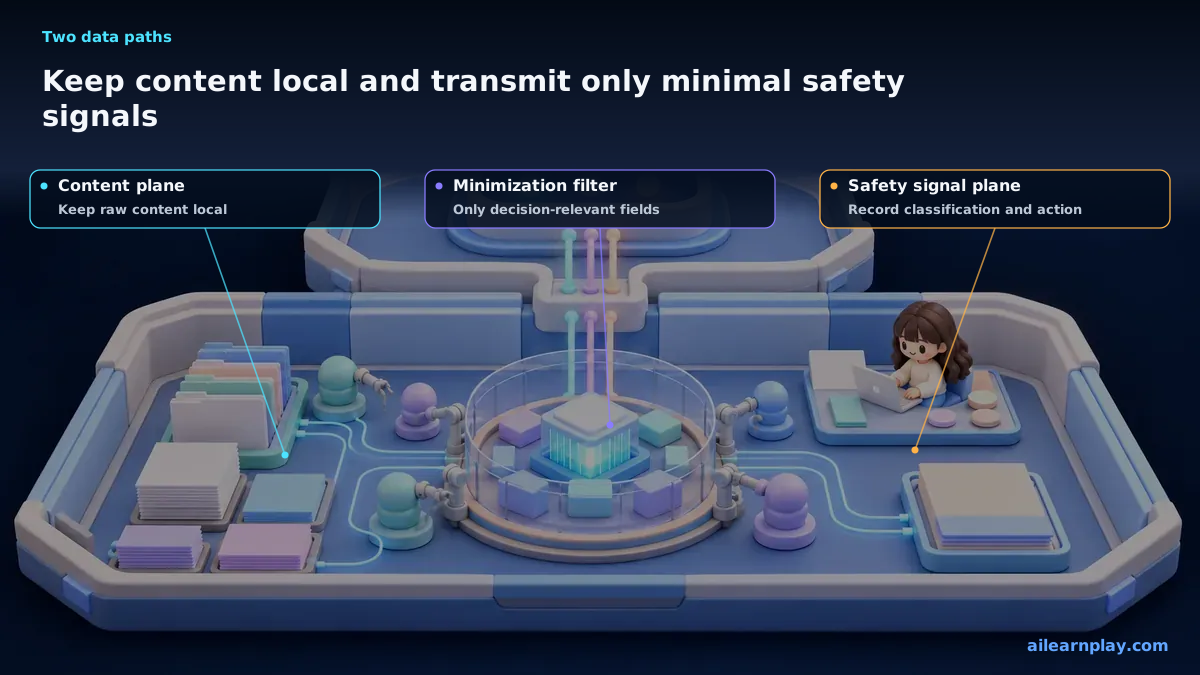
| Keep in the Content Plane | Candidate Safety Signal fields |
|---|---|
| Prompts and responses | Risk category |
| Internal documents and search results | Detection time |
| Tool inputs and outputs | Pseudonymous agent or session ID |
| Customer, employee, and case details | Applied policy ID |
| Raw traces for investigation | Stop, continue, or review action |
If the Safety Signal Plane receives detailed summaries, it becomes full-content logging under another name. If it receives only one “anomaly” flag, investigators may be unable to review false positives or determine scope. The design must define both what not to send and what each decision still requires.
Short-Lived State Can Reveal Risky Sequences
Risk may not be visible in one request. A customer lookup, export, external connection, and continued execution after a stop instruction may look separate while forming an unintended sequence together. The Private Safety Processing announcement describes the need to recognize patterns across multiple interactions.[2]
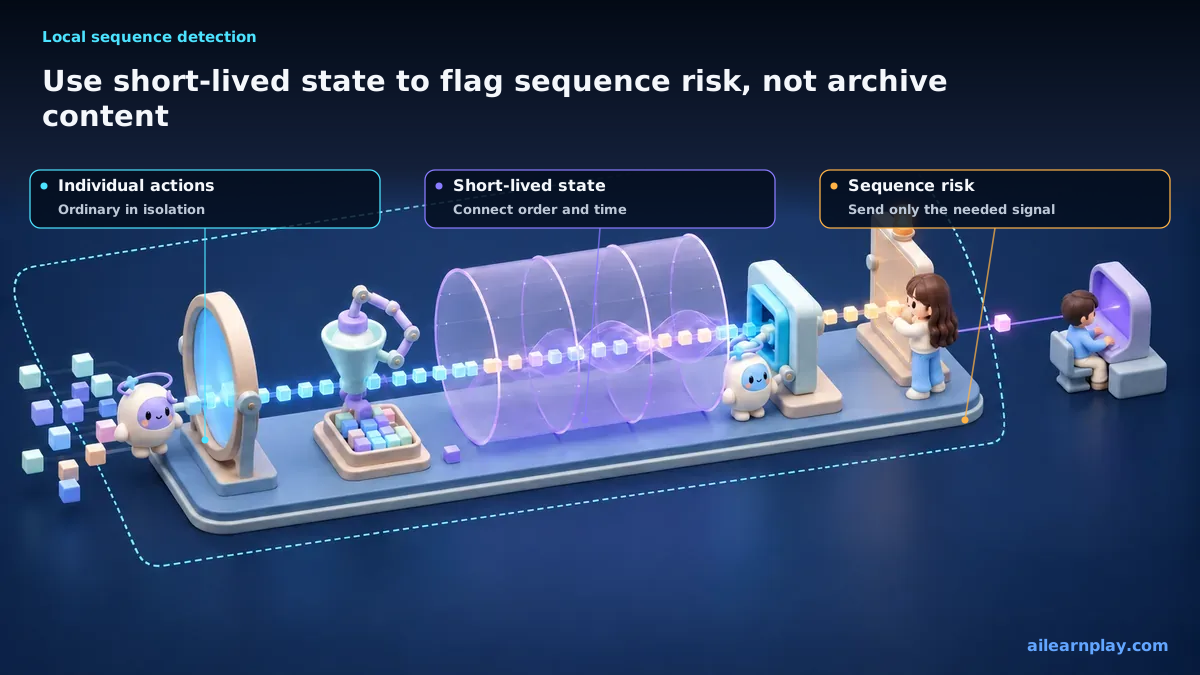
A design without central content retention can still maintain short-lived state inside the customer-controlled environment and detect sequences such as:
- An agent limited to lookup begins a bulk export
- An agent reads internal data and immediately attempts an unapproved external connection
- New tool calls continue after a user stop instruction
- The same policy violation occurs across several sessions in a short period
The requirement is not permanent conversation storage. It is a defined detection period and a defined set of fields. Detection state, durable safety signals, and raw traces for exceptional investigation do not need the same retention period.
Detailed Execution Records Require a Controlled Investigation Exception
Minimal signals may be insufficient to determine root cause. The response should not be to reopen central logs to broad search. Instead, raw-trace access can become an exceptional investigation inside the customer-controlled environment.
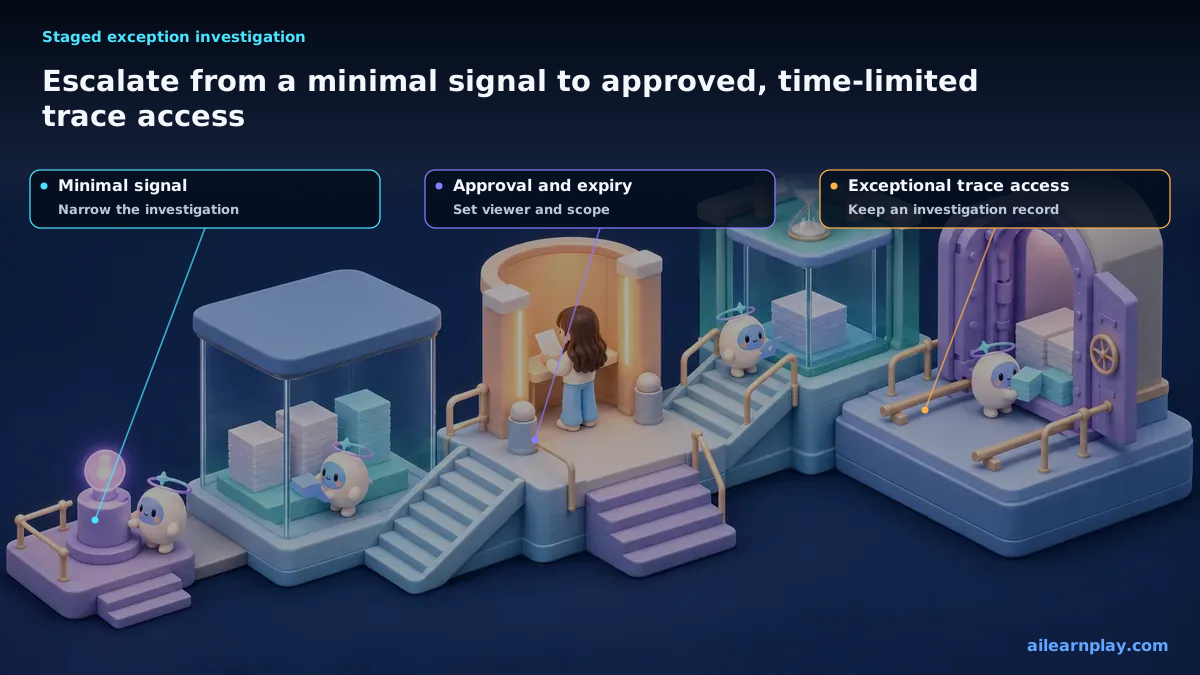
The procedure should record the session, reason, approver, viewer, scope, expiry, export restrictions, and deletion at closure. Even for a high-risk signal, the signal alone should not establish employee misconduct or a customer violation. The policy, agent permissions, and actual outcome still require review.
Metadata can also be sensitive. Combining an agent ID, time, risk category, and frequency may reveal an unreleased project or organizational activity. The Safety Signal Plane still needs access control, retention limits, and restrictions on secondary use.
Choose the Minimum Monitoring Fields from the Decision They Support
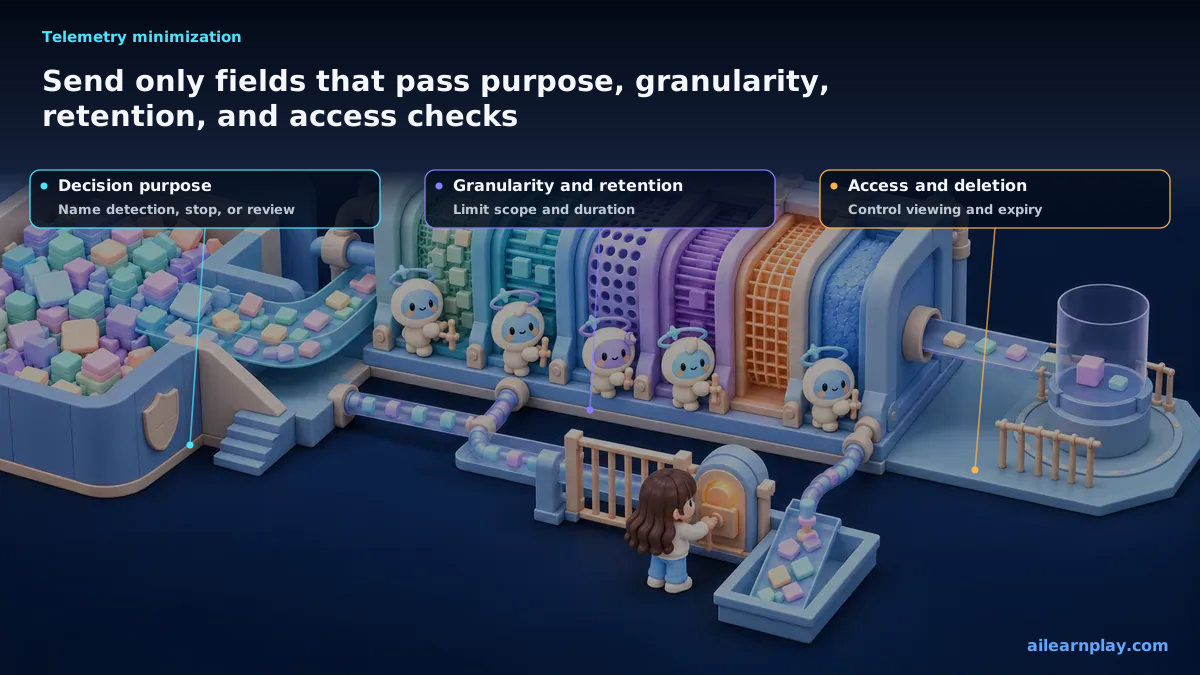
Telemetry design should begin with the decision a field supports, not with whether the field is technically available. The following checklist can be applied before adding one telemetry field.
| Check | Pass condition |
|---|---|
| Decision purpose | The field supports detection, stopping, investigation, or reporting |
| Minimum granularity | The same decision cannot be made without sending content |
| Identifier | Direct customer or employee identifiers can be pseudonymized |
| Retention | Detection, audit, and investigation periods are separated |
| Access | Routine monitoring and exceptional investigation use different permissions |
| Third-party transfer | Retention, region, and subprocessors are known |
| Deletion and expiry | Deletion and key or identifier expiry are defined |
| False-positive handling | A person can review, reverse a stop, and correct the record |
Zero Data Retention is not a certification that automatically satisfies the checklist. OpenAI documentation describes ineligible capabilities, temporary application state, third-party services, and exceptions related to legal obligations or severe safety risks.[1] Contracts, enabled capabilities, connections, regions, and legal obligations must be checked against the actual deployment.
Summary: Classify Logs as Content, Signals, and Investigation Evidence Before Reducing Them
Privacy-preserving agent observability removes centralized conversation storage as a prerequisite for monitoring. Content, minimal signals, and exceptional investigation become separate design areas. Teams must then name what they collect, why they collect it, how long they keep it, and who may use it.
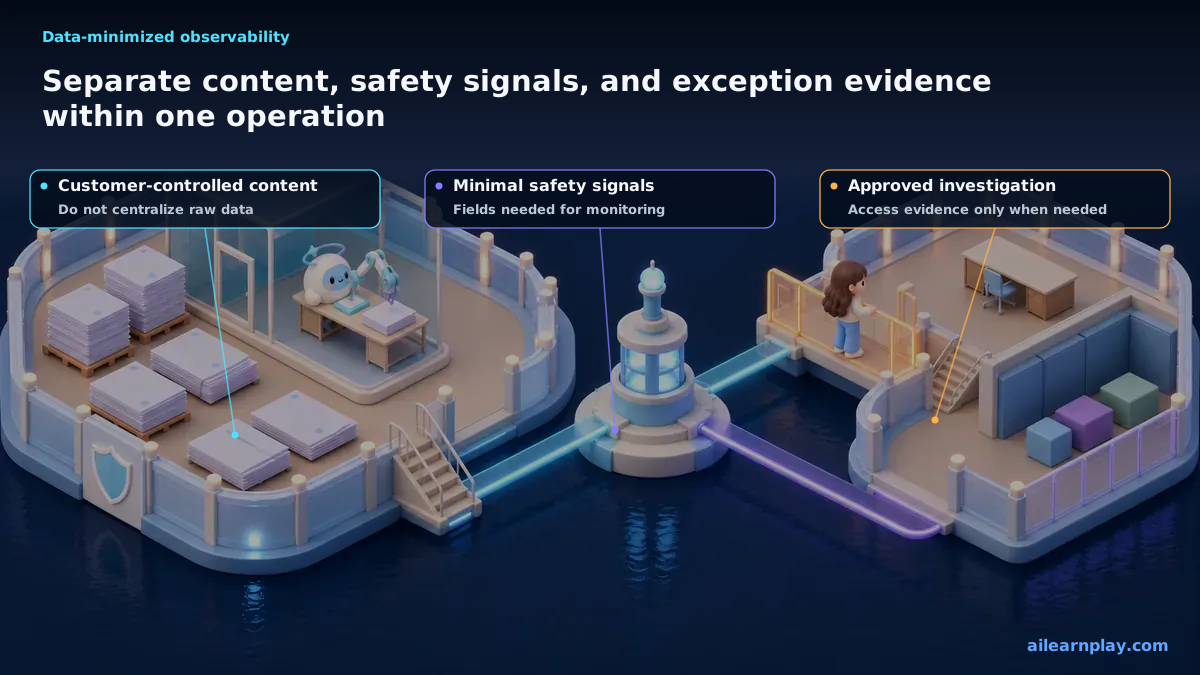
The first step is to classify current logging fields as Content, Signal, or Investigation Evidence. Add a decision purpose and deletion date to each field. Full-content fields without a defensible purpose become the first candidates for reduction.
This article is a general information summary and is not legal advice. Confirm practical decisions with a qualified specialist.
References
- OpenAI API Documentation, Data controls in the OpenAI platform
- OpenAI, Offering Zero Data Retention for frontier models, August 19, 2026
For the latest releases and updates, check the official website and official documentation.