

What Is AdCP? Governing AI Advertising from Creation to Delivery



What you’ll learn
- How AdCP connects the campaign request, ad creation, finished-preview review, and approved-version delivery
- Why the roles that propose an ad, check rules, and deliver it should remain separate
- Which AI-image markers and right-use assertions AdCP can carry, and why rights review, consumer disclosures, and legal decisions remain separate
- Who should verify the ad ID, approved version, rights review, and disclosure decision before delivery
AdCP Connects AI Advertising Workflows Through Shared Procedures
AdCP, the Advertising Context Protocol, is a public rulebook for exchanging information about creating, checking, and delivering an ad. A campaign request, finished preview, review result, and approved version can follow the same procedure even as responsibility changes hands. This record preserves who checked each item and which version was delivered.
By the end of this article, you will have practical criteria for answering “What should the protocol and the deploying organization each control when an AI-generated ad moves into distribution?” in your own context.
AdCP Standardizes Requests, Creation, Finished Previews, and Delivery
AdCP treats its specifications and JSON Schemas—computer-readable rules for checking field names, formats, and required information—as the formal exchange rules. Its public server is an explanatory example.[1]
The procedure starts with a request that describes the advertising goal and retrieves the provider’s formats and requirements. It then creates or registers the ad, checks a finished preview, and transfers the approved version. The documentation treats creation, preview review, and transfer of the final version as separate operations.[2]
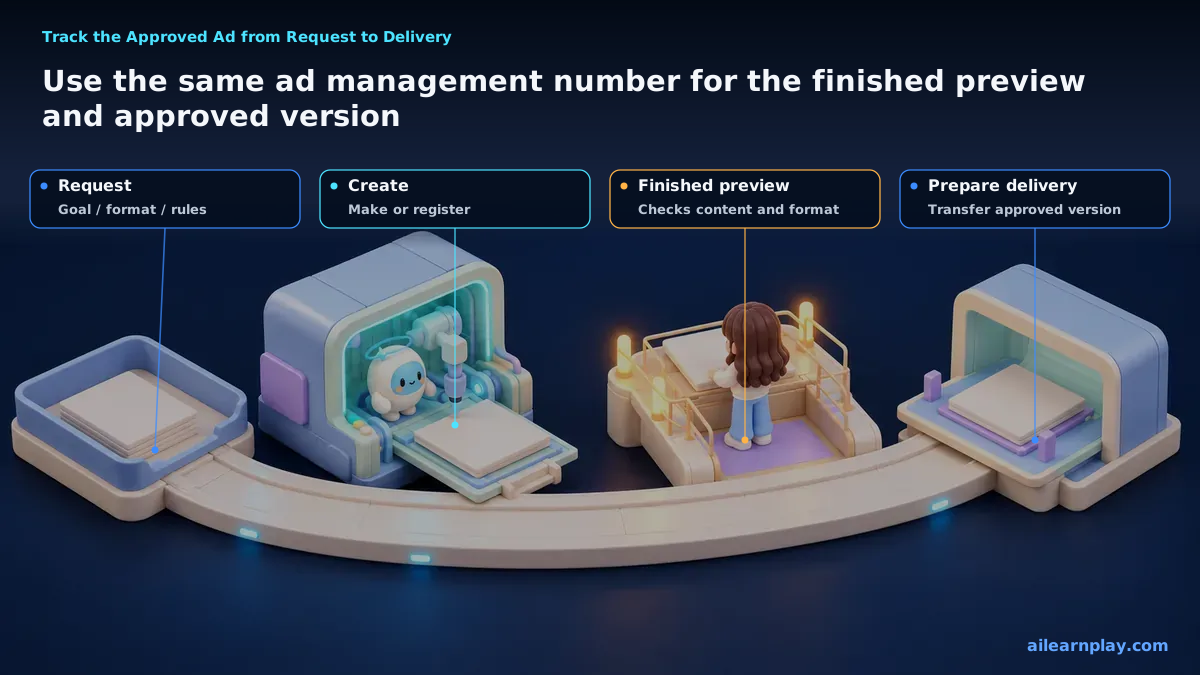
This standardization is especially useful when teams work across multiple production tools and media channels. They can learn the provider’s format requirements before finishing the ad. They can also connect the finished preview and the transfer of the approved version to the same management number, making the delivered version easier to trace.
Meeting the required file size and fields does not show that the ad follows brand rules, usage permissions, laws, or local customs. A separate reviewer still decides whether it may proceed.
Separate Roles Propose the Ad, Check Rules, and Deliver the Approved Version
A coordinating service on the advertiser’s side proposes an action. A separate checking service compares it with the budget, brand requirements, and company rules. The advertising provider then distributes only approved ads. AdCP calls these roles the orchestrator, Governance Agent, and seller.
A failed check can lead to rejection, a requested change, or return to a human decision owner, with a saved decision record.[3]
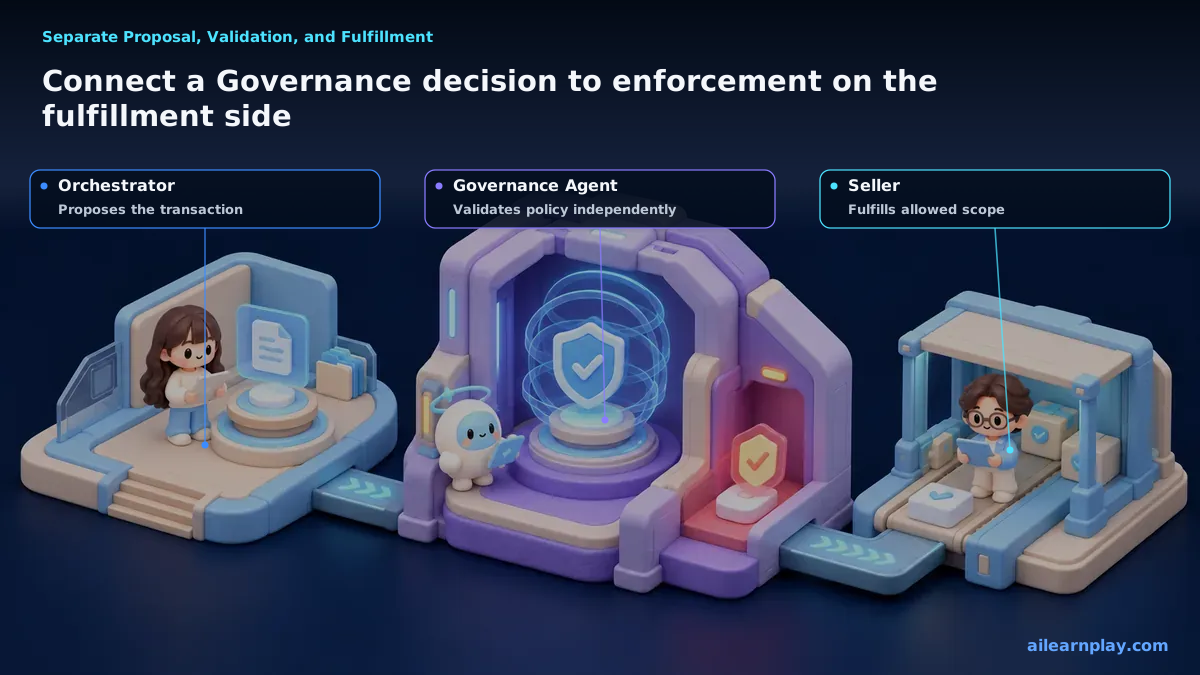
The separation prevents the same AI service from making the ad, spending the budget, and approving its own work. An organization may allow AI to make a draft but stop it before delivery if its words or images break the organization’s brand rules, it targets a place excluded from the campaign, it exceeds the budget, or there is no record showing permission to use source material, a person’s likeness, or a person’s voice.
AdCP does not by itself prove that every rule has been followed. A system that omits the checking step or is configured incorrectly may deliver an ad without approval. The deploying organization must separately ensure that the delivery provider stops rejected work, follows company rules, obtains human approval, and checks what happens after delivery.[4]
AdCP AI-Image Markers and Right-Use Assertions Do Not Determine Disclosure Requirements
Current AdCP 3.1.2 can carry a true-or-false marker showing whether an image was AI-generated, together with assertions about the right to use an ad asset. The marker says only whether an image is marked as AI-generated. It is not a history of who created or edited the work, which AI system they used, when they acted, or how the work changed.[4]
The official AdCP documentation states that the current specification does not provide a signed provenance graph that accumulates assertions through generation, editing, and adaptation. Interoperation with C2PA remains future work.[4]
Current AdCP also does not define a common mandatory disclosure for AI-generated content in a delivered ad. A right-use assertion, an AI-generated-image marker, or a rule-check result does not validate contracts or consent, determine a required disclosure, or establish legal compliance in a country or region. Advertising providers and deploying organizations must make those checks under their own conditions.[4]
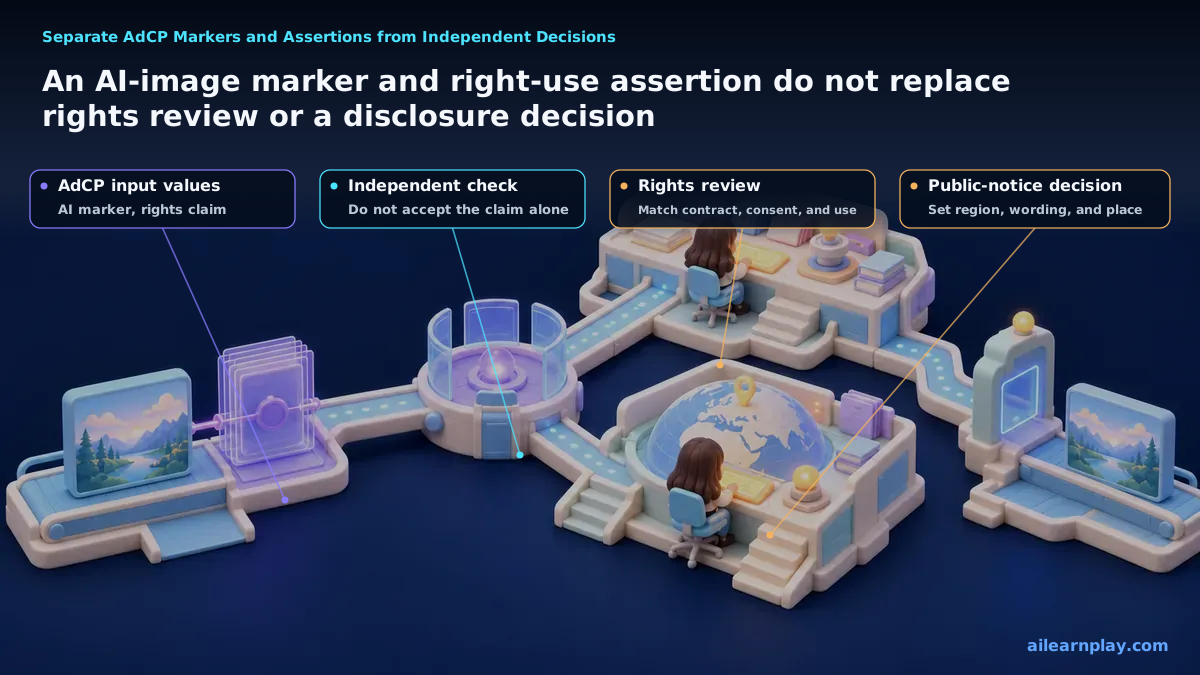
The three states below show what still needs checking after AdCP carries a value. They are an author-created synthesis, not an official AdCP classification.
| State | Meaning | What it does not establish |
|---|---|---|
| An AI-generated-image marker exists | The sender marked the image as AI-generated | Who created or edited it, which AI system was used, whether the history is complete, or whether the record is signed |
| A right-use assertion exists | The sender says it has the right to use the ad asset | Contracts and consent were validated |
| A rule-check result exists | A result was recorded against defined rules | Every law and advertising provider’s rule was satisfied |
An AI Advertising Governance Handoff Assigns Pre-Delivery Checks and Owners
The following AI Advertising Governance Handoff connects the information carried by AdCP, the checks performed by the organization, and the person responsible for each decision to one advertising project. It is an author-created template, not an official AdCP document.
In the table, campaign means the advertising project, creative means the ad being delivered, seller means the provider that distributes it, and Governance result means the rule-check outcome.
| Handoff item | Information carried by AdCP | Who checks and what they do | Problem stopped |
|---|---|---|---|
| Ad management number | Campaign, creative, version, destination | The delivery-records team keeps the same number and approved version from review through delivery | The wrong or changed version is delivered |
| Production | Request describing the advertising goal, format, finished ad, finished preview | The creative owner confirms that the AI service and supplied information are permitted | An unapproved service or prohibited input is used |
| Brand | Brand name and rules that apply | The brand owner checks claims, words, images, and local context | Misleading, off-brand, or locally unsuitable advertising proceeds |
| Rights | Rights assertion and location of the contract or consent record | The legal or rights owner matches contracts and consent to the source material, person’s likeness or voice, and intended use | Material or personal information is used without permission |
| AI information | AI-use details, the person or organization making the statement, C2PA references or creation information stored in the file, and results of checks | The AI-use rules owner decides what creation details must be recorded and how they are checked | Unsupported claims about how the ad was made proceed |
| Human approval | Rule-check result and return to a human decision owner | The business owner records the approver, covered version, end date, replacement approver, and reasons to stop | Expired approval or approval for another version is reused |
| Consumer disclosure | Declared requirement, country or region, wording, and display instructions | Legal and advertising-provider-rule owners decide the wording, placement, region, and advertising destination | A required disclosure is missing or displayed incorrectly |
| Delivery record | Advertising provider, approved-version transfer state, saved decision record | Delivery and later-review teams save what was delivered, stop it after a problem, and record removal | The organization cannot trace or remove the ad |
Before delivery, check the ad management number, approved version, rights review, rule-check outcome, and decision about the consumer disclosure explaining AI use as one set. A change to any member of the set should trigger reapproval and prevent an older version from remaining on the delivery waiting list.
Pilot One Campaign, One Ad Format, and One Advertising Provider
An initial deployment can select one ad format and one advertising provider instead of automating several media destinations. The pilot should confirm that the same management number survives the round trip through the campaign request, finished preview, brand review, human approval, transfer of the approved version, and post-delivery records.
It should also test whether the advertising provider actually stops delivery after the checking service rejects an action and whether expired approval or an ad replacement triggers another review. A valid AdCP message is not an effective control if the delivery side ignores it.
Summary: Usage Rights, Consumer Disclosures, and Final Approval Still Belong to the Deploying Organization
AdCP shows how AI advertising generation, finished previews, rule-check results, and delivery can be handed off among participants with different roles. AdCP supplies shared procedures. Confirmation that contracts and consent are valid, consumer disclosures, enforcement of company rules, and final approval remain with deploying organizations and advertising providers.
For a pilot, complete one AI Advertising Governance Handoff. Separate information carried by AdCP, checks performed by the organization’s own tools, and decisions made by people. In particular, do not treat an AI-generated-image marker, a right-use assertion, or a rule-check result as automatic proof of a complete creation history, validated rights, or legal compliance.
This article is a general information summary and is not legal advice. Confirm practical decisions with a qualified specialist.
References
- Ad Context Protocol, AdCP - Advertising Context Protocol
- Ad Context Protocol, Creative Protocol
- Ad Context Protocol, Governance Protocol
- Ad Context Protocol, Trust & Security
For the latest releases and updates, check the official website and official documentation.