

Verification-First Agents: Validating Answers Through Evidence

What you’ll learn
- Why fluent answers and an AI’s self-evaluation do not complete verification
- Why the roles that produce answers and check evidence should be separate
- How to prioritize verification methods outside generative AI
- How to connect a claim, evidence, and verification table to approval and execution
Verification-First Agents Connect Claims, Evidence, and Checks by Design
A Verification-First Agent connects each claim to evidence and a verification method when the claim is produced. Google Research on July 30, 2026, and Anthropic on August 18 described agent workflows that connect outputs to sources, execution records, and external experiments. When an AI answer affects approval, payment, diagnostic support, publication, or system changes, only verified portions should advance.
By the end of this article, you will have practical criteria for answering “How can an agent answer be made traceable and independently verifiable without relying only on another model’s opinion?” in your own context.
Separate the Role That Produces an Answer from the Role That Checks Its Evidence
A generator produces an answer or candidate. A verifier checks whether the claims are supported by evidence. Asking the same model to “check again” can identify some mistakes, but the model may repeat an error when its assumptions or sources remain unchanged.
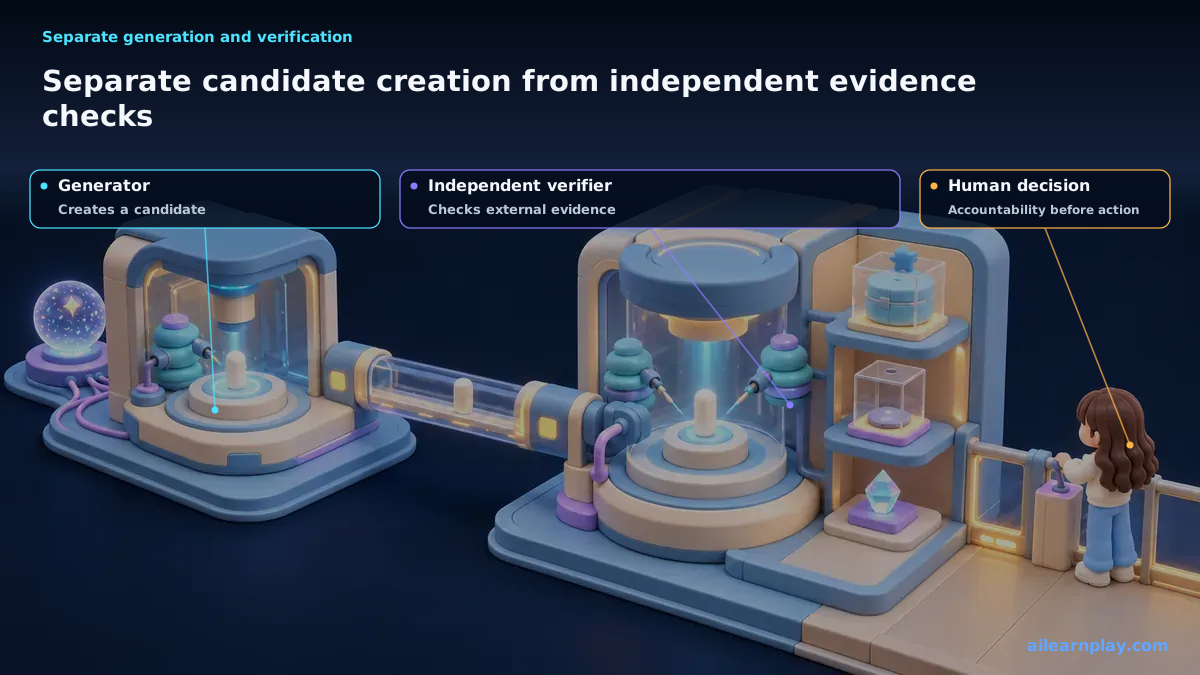
In Anthropic’s protein-design campaign, Claude orchestrated specialist models to produce candidates, while Adaptyv Bio and Twist Bioscience independently tested them in wet labs. Binders were confirmed for 14 of the 15 reported targets.[1] Different actors and methods handled generation and experimental verification.
Google Research’s Science One links claims to papers, code, experiment logs, and result tables while a paper is being produced rather than reconstructing citations afterward.[2] The system is an experimental research prototype, not a production product. Its reported results do not establish a general performance guarantee for business workflows.
Evidence Is Attached When a Claim Is Produced
Adding support after an answer is complete creates a risk of selecting material that merely fits the finished prose. A Verification-First workflow records an evidence identifier, retrieval time, applied rule, and verification method whenever the agent produces a claim.
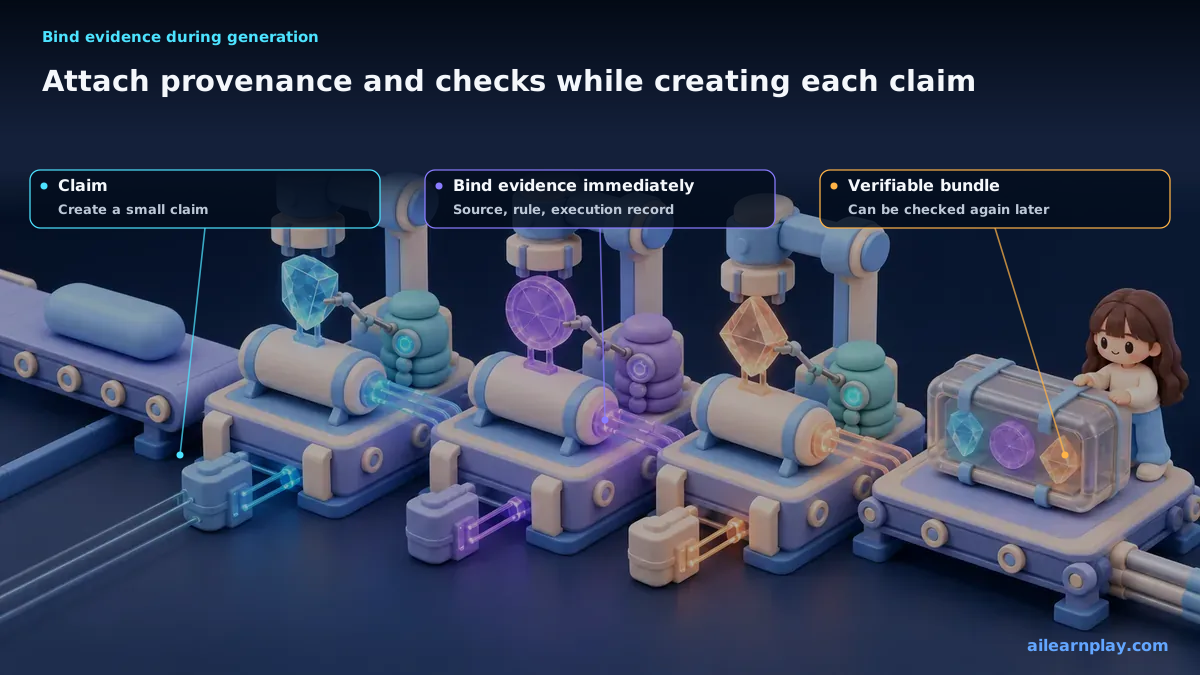
If an expense agent says that a JPY 12,300 rail expense is eligible, it should link the receipt amount, travel period, policy limit, and route information. Displaying source names is not enough. The amount match, date range, and policy threshold should be reproducible checks.
Evidence must fit the type of claim. A link to a real document does not prove a calculation is correct. A passing test does not independently prove compliance with a contract. Separating these relationships exposes missing checks.
Choose Verification Methods by Independence and Reproducibility
A verifier does not have to be another LLM. When an answer can be calculated, a rule is written, or a source system can be queried, a deterministic method may provide stronger evidence than another generated opinion.
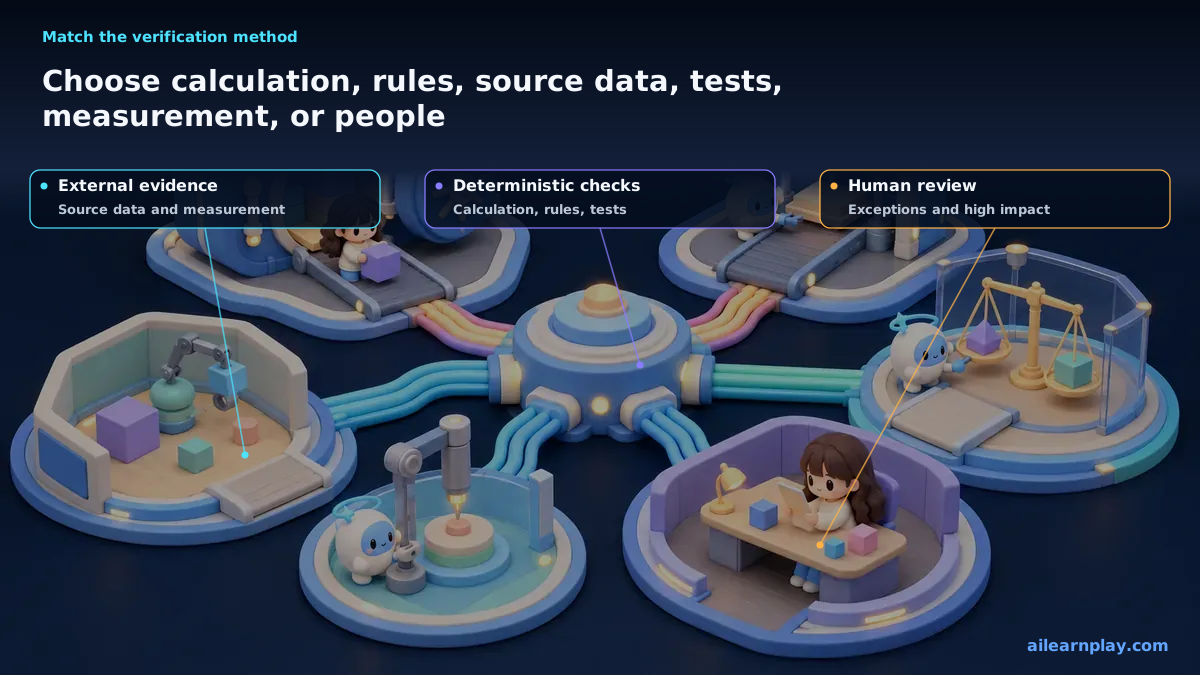
| Claim | Preferred verification | Escalate to a person when |
|---|---|---|
| Total amount | Calculator, SQL, recomputation | Inputs are missing or currencies conflict |
| Policy compliance | Rules engine, versioned policy | Exceptions or policies conflict |
| Source data exists | Source API, signed document | The source is unavailable or unknown |
| Software behavior | Unit test, isolated execution | Effects are external or irreproducible |
| Prose is appropriate | Source comparison, expert review | Interpretation is ambiguous or consequential |
| Physical property | Experiment, measurement, inspection | Measurement conditions are undefined |
LLM-as-a-Judge can support evaluation of free-form quality or explanatory clarity. Externally checkable facts such as money, inventory, permissions, and physical outcomes should not end with model opinion alone.
A Claim, Evidence, and Verification Table Makes Decisions Traceable
A Claim-Evidence Ledger connects an agent claim, evidence, verification result, and next action in one row. It is not just a bibliography. It shows which claim passed which check.
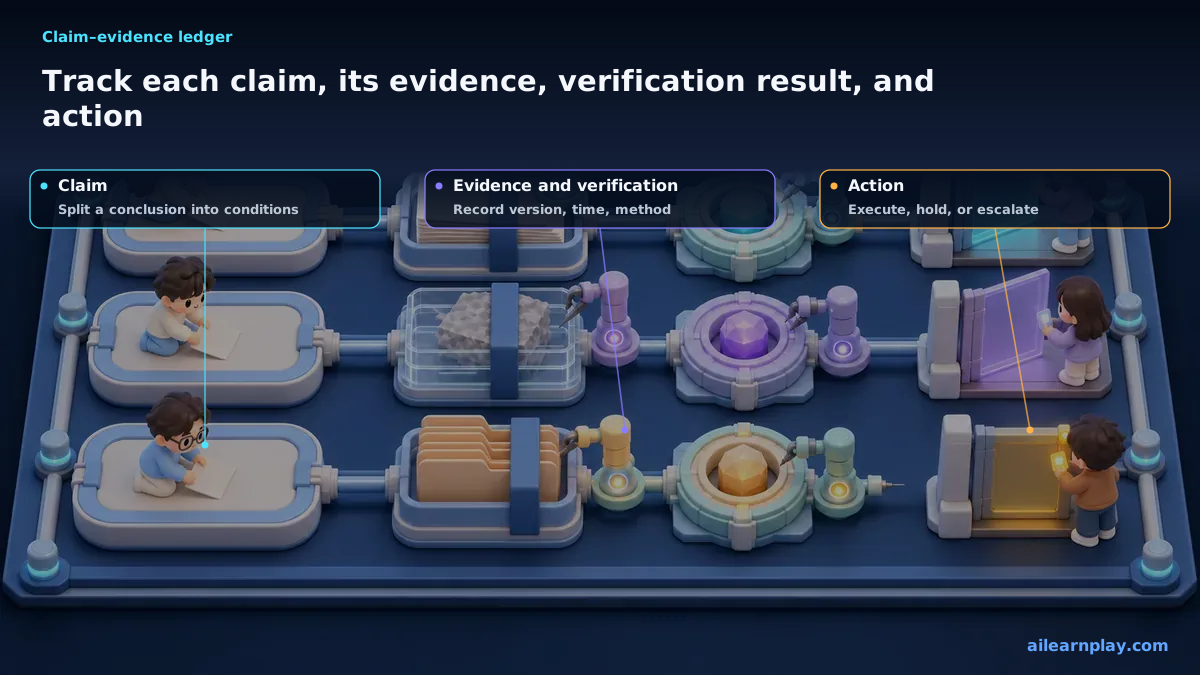
| Field | Example |
|---|---|
| Claim ID | expense-2026-0819-07-limit |
| Claim | The request is within the rail-expense limit |
| Evidence | receipt-07, policy-v4 §3.2 |
| Version and retrieval time | policy-v4, 2026-08-23 09:30 JST |
| Verification | Deterministic comparison of receipt total and limit |
| Result | pass |
| Unverified item | Business purpose of the route |
| Action | Send for human review |
| Executor and approver | Agent ID, reviewer ID |
Use a separate row for each claim in an answer. An approval conclusion may depend on amount, date, purpose, receipt, and duplicate status. A single conclusion row would hide which condition remains unverified.
Verification Coverage and Exception Handling Become Operating Metrics
Accuracy alone does not show how many claims were never checked. Verification Coverage is the proportion of in-scope claims that have the required evidence and verification result. It should be tracked separately from unresolved exceptions.
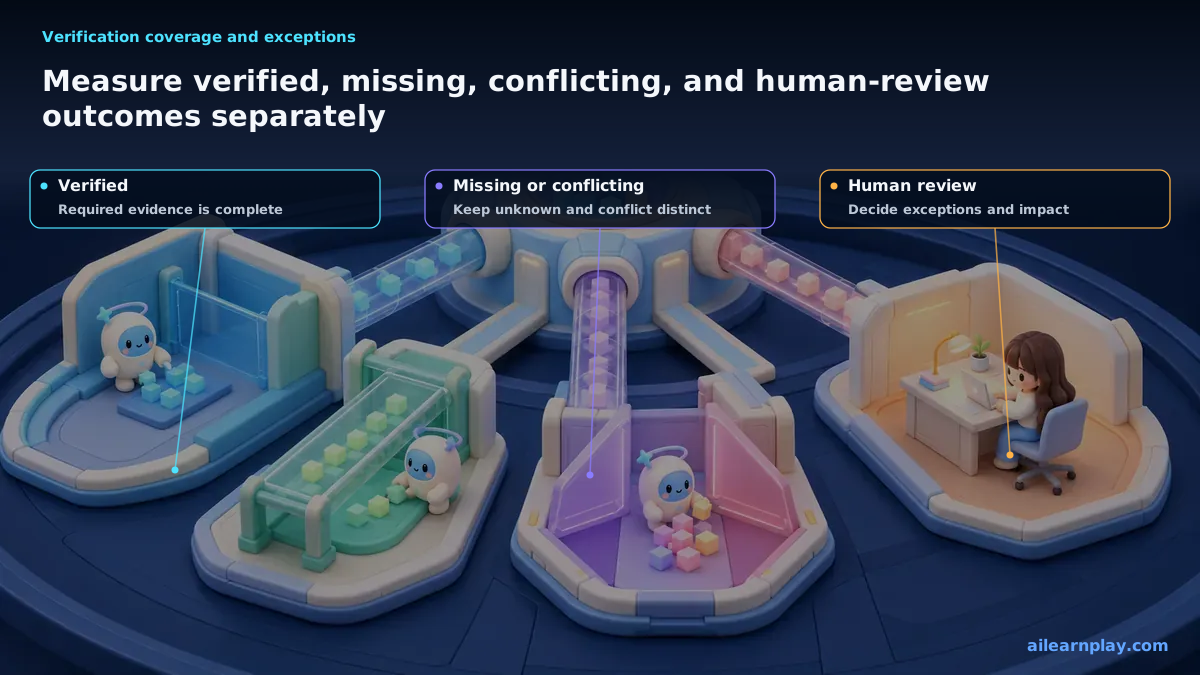
Useful measures include:
- The proportion of claims connected to at least one evidence item
- The proportion supported by evidence that directly addresses the claim
- The proportion reproducible with a deterministic method
- The number escalated for missing, conflicting, or expired evidence
- False approvals and false stops
- Results whose evidence could not be reproduced after execution
Do not make the coverage figure look better by attaching weak material for form’s sake. A claim without evidence should remain unknown. Conflicting evidence should remain conflict. The workflow can then choose retry, additional retrieval, human review, or stop.
Anthropic’s campaign used GPU computation and weeks of external laboratory work.[1] Google Research evaluated research tasks.[2] The reusable part for a typical organization is not the compute scale or reported score. It is the separation of generator, evidence, independent verifier, and accountable human judgment.
Summary: Start Verification with a Claim-Evidence Ledger for One Consequential Decision
A Verification-First Agent does not ask for confidence after an answer is written. It connects claims to evidence and verification methods at creation time, then advances only the verified scope to a decision or action. AI can produce candidates while rules, calculations, source systems, people, and physical measurements verify the appropriate parts.
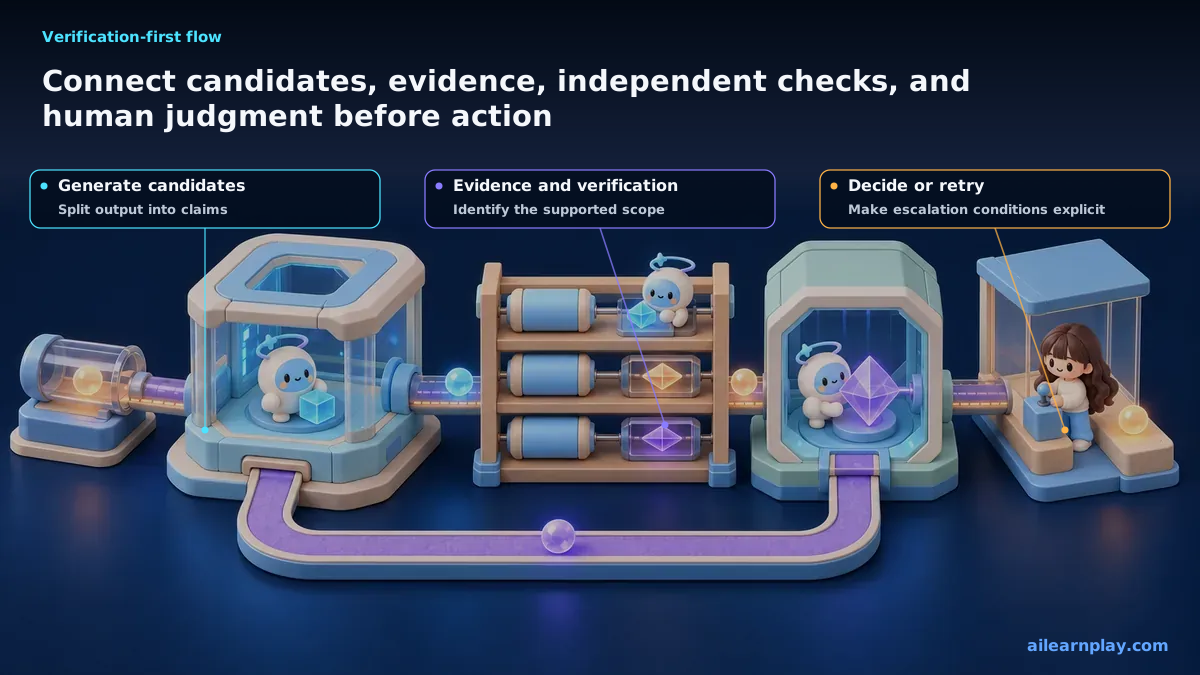
Start with one consequential decision, split the conclusion into small claims, and record the evidence and verification method for each claim in a Claim-Evidence Ledger. Treating unknowns as explicit escalation conditions connects answer quality with business accountability.
References
- Anthropic, How Claude is accelerating protein design and analytical chemistry, August 18, 2026
- Google Research, Science One Framework: A verifiable autonomous research framework via Chain-of-Evidence, July 30, 2026
For the latest releases and updates, check the official website and official documentation.