

What Is OpenMontage? Governing AI Video Production in the Enterprise

What you’ll learn
- Why OpenMontage supports production coordination rather than serving as an AI video generation model
- Why human review is divided across several stages between concept and release
- The difference between administering ChatGPT or Gemini and managing a production project
- How to use an eight-part AI video production rules worksheet on one project
OpenMontage Manages Roles, Approvals, and Records Across Video Production
OpenMontage is an open-source system that manages roles, stages, approvals, and records across AI video production. The work around generation still includes concept selection, script review, asset choice, cost and rights checks, and final publication approval. Even when the production tools change, a team can retain shared completion criteria, human review points, and decision records.
By the end of this article, you will have practical criteria for answering “How does OpenMontage organize AI video work and review points, and which ideas can an organization adopt first?” in your own context.
OpenMontage Coordinates Planning, Assets, Generation, Review, and Publication
The simplest way to understand OpenMontage is as a system for coordinating production, not as a video generation model.
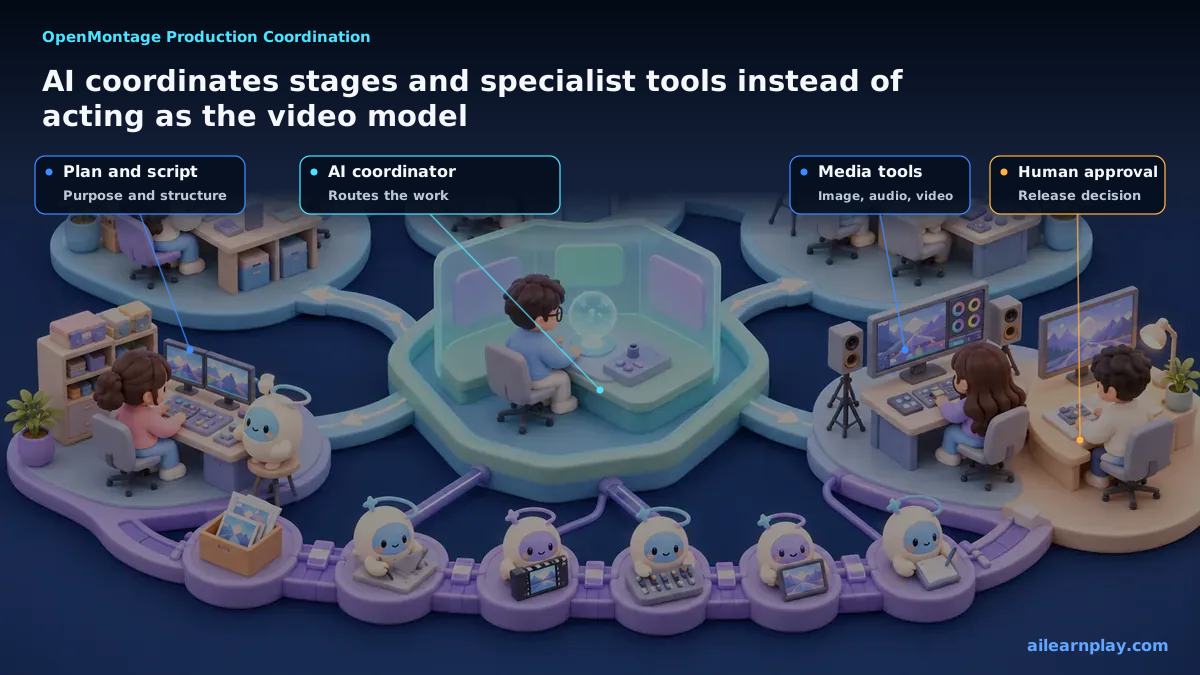
Consider a 60-second product video. A team first agrees on the purpose and audience. It then reviews the script and scene plan before creating images, speech, or footage. After editing, someone approves the final version. If the concept changes midway, the team also needs a reason for the change and a new approval.
OpenMontage gives the coordinating role to an AI coding assistant. This type of AI can read files and operate tools according to a defined process, rather than working only through a chat window. The official README lists Claude Code, Cursor, Copilot, Windsurf, and Codex among the expected assistants.[1]
The official material and a representative production flow show AI choosing the next task while separate software performs image or speech work and saves progress.[2] The goal of the research was not to rank the software by feature count. It was to understand who moves the work forward, where a person decides, and where each decision is recorded.
OpenMontage Separates Responsibilities from Planning Through Publication
OpenMontage does not give every responsibility to one AI. It separates accountability into a coordinator, production plan, working guide, specialist service, production record, and review point. The following classification translates the official design into responsibilities that a production team can recognize.[2][3]
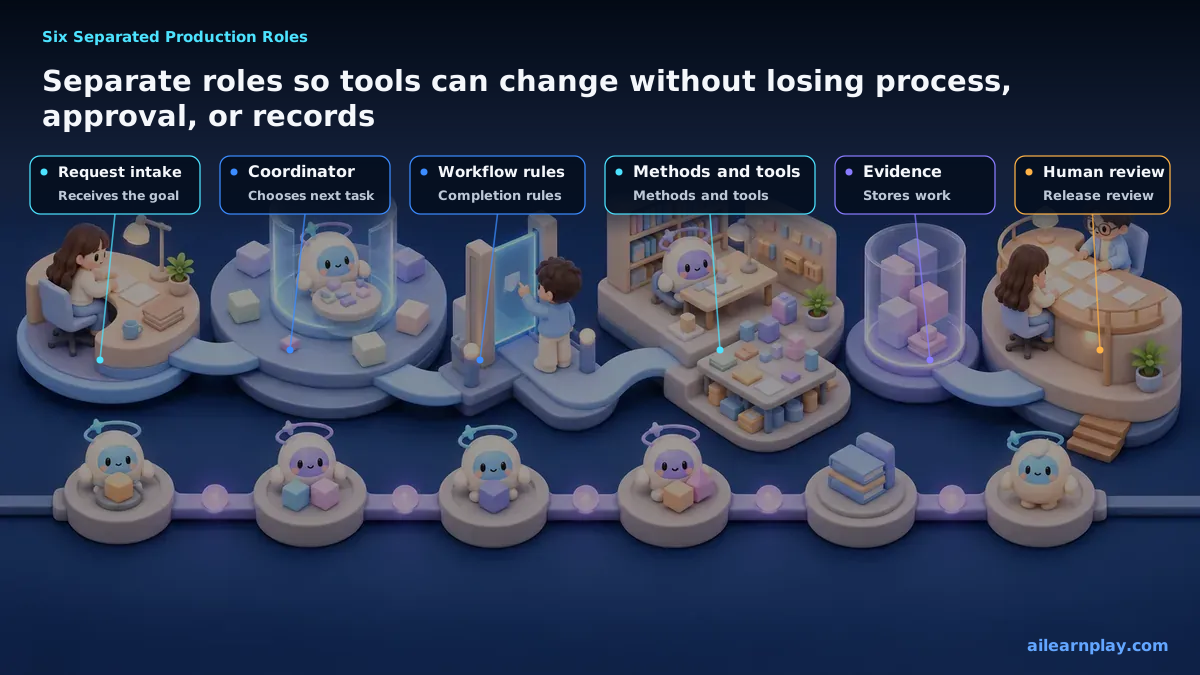
The diagram shows the handoff from request intake to human review and groups the working guide with specialist services in one work area. The table below separates the same flow into six system responsibilities.
| Role | What it does | OpenMontage term |
|---|---|---|
| 1. Coordinator | Reads the request and chooses the next task | AI agent |
| 2. Production plan | Defines the order, completion conditions, and review points | Pipeline |
| 3. Working guide | Describes how to approach scripts, editing, and asset choices | Skill |
| 4. Specialist service | Generates or edits images, speech, and video | Tool |
| 5. Production record | Stores scripts, assets, reasons, costs, and progress | Saved work and logs |
| 6. Review point | Checks quality, waits for approval, and shows progress | Review and visibility |
This separation lets a team change a tool without rewriting every production rule. Replacing an image service, for example, does not have to change who approves the script or where asset rights are checked.
Reviewing Work Along the Way Reduces Large Revisions
An OpenMontage pipeline is easier to understand as a shared production plan than as a technical configuration file. It defines the order of work, what counts as complete at each stage, and where a person must approve the result.
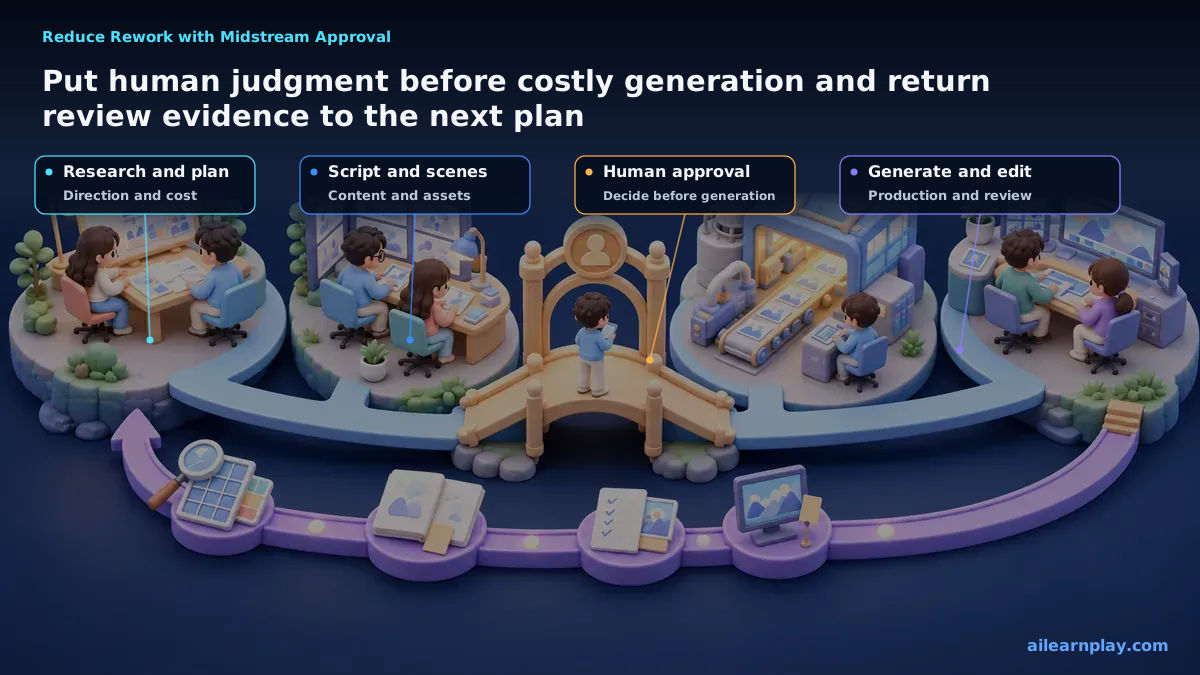
The official Animated Explainer flow has eight stages: research, proposal, script, scene planning, assets, editing, composition, and publishing.[4] The flow is easier to follow when grouped into four parts.
| Part | Main work | Human review |
|---|---|---|
| 1. Set direction | Research and proposal | Purpose, creative direction, and estimated cost |
| 2. Set the content | Script and scene planning | Claims, structure, and required assets |
| 3. Make the piece | Asset creation and editing | Selected images, video, speech, rights, and quality |
| 4. Finish it | Composition and release preparation | Final version, destination, and permission to release |
Approval occurs throughout the workflow. The concept is reviewed before expensive asset generation, and the script and scenes are reviewed before editing. Work pauses at the unresolved decision instead of returning to the beginning after the video is finished.
OpenMontage also rejects an attempt to mark a stage as complete when that stage requires a named person’s approval and the approval has not been recorded.[5] The review rule is therefore more than a written request. The production flow cannot continue as though the decision had already been made.
OpenMontage Retains Evidence, Assets, Decisions, Approvals, and Cost Records
A final video alone cannot explain why a concept was chosen, which source assets were used, or who approved publication. OpenMontage also saves information created during production.[2][3]
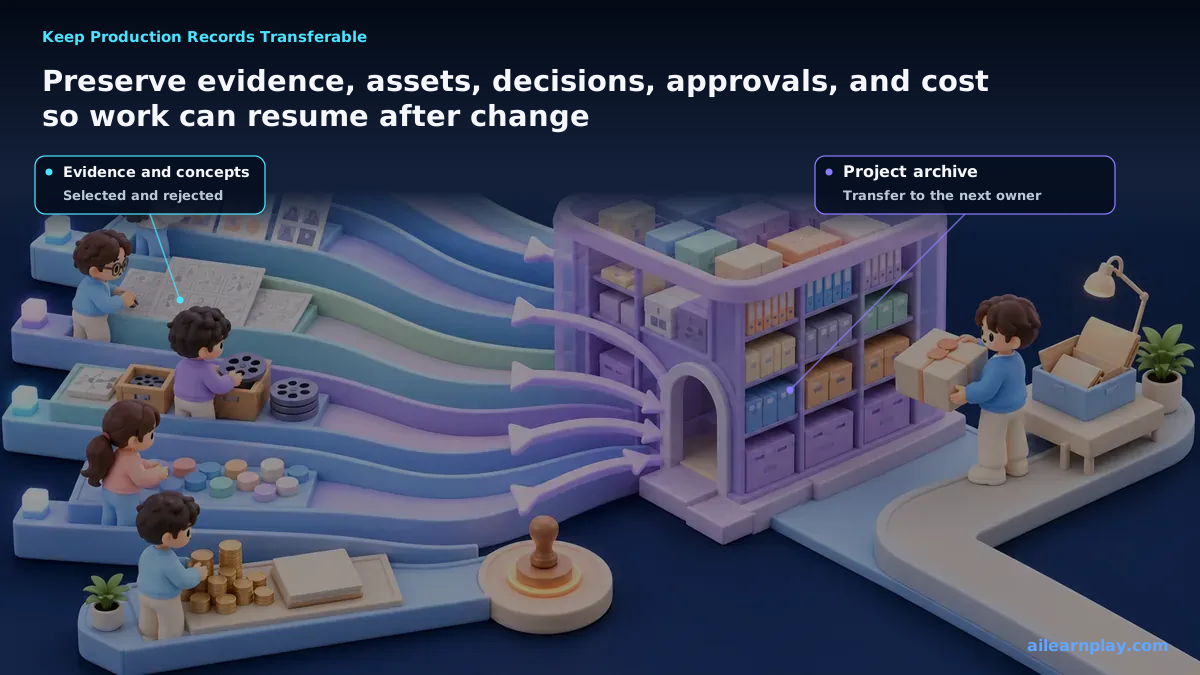
Examples include:
- Evidence collected during research
- The selected concept and alternatives that were not selected
- The approved script and scene plan
- The source of each image, clip, and voice asset
- Reasons for later changes
- Estimated and actual cost
- Who approved which item and when
These records help a new team member resume the work. They also preserve decisions and review conditions when the team changes to a different AI service.
Separate Guidance for AI from Rules That Can Stop the Work
Instructions alone cannot enforce every requirement. OpenMontage separates flexible production guidance from mechanical checks that can stop a workflow.[3][5]
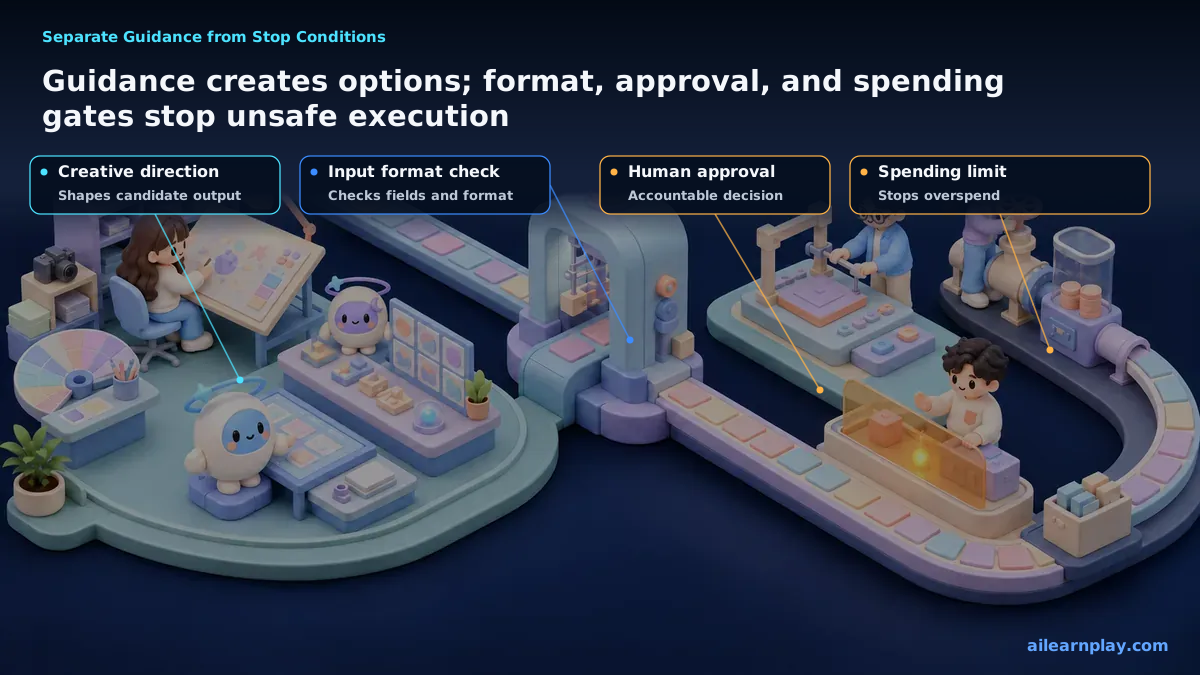
| Type of rule | Example | Suitable use |
|---|---|---|
| Creative direction for AI | Brand voice and editing principles | Create options and support judgment |
| Format check | Required fields, file type, and video dimensions | Detect missing or malformed inputs |
| Human approval | Concept, script, assets, and release | Pause work until an accountable person decides |
| Spending limit | Budget and threshold for extra approval | Stop an operation that would exceed the limit |
For example, writing “check the rights for images of people” in an AI instruction does not prove that the check happened. Recording the reviewer, asset, outcome, and time—and preventing release while the check is missing—turns the instruction into an operating rule.
ChatGPT and Gemini Administration Has a Different Job
ChatGPT Enterprise and Gemini for Google Workspace provide controls for organizational use. They form a foundation for managing users, connections, data handling, and retention.[6][7][8][9]
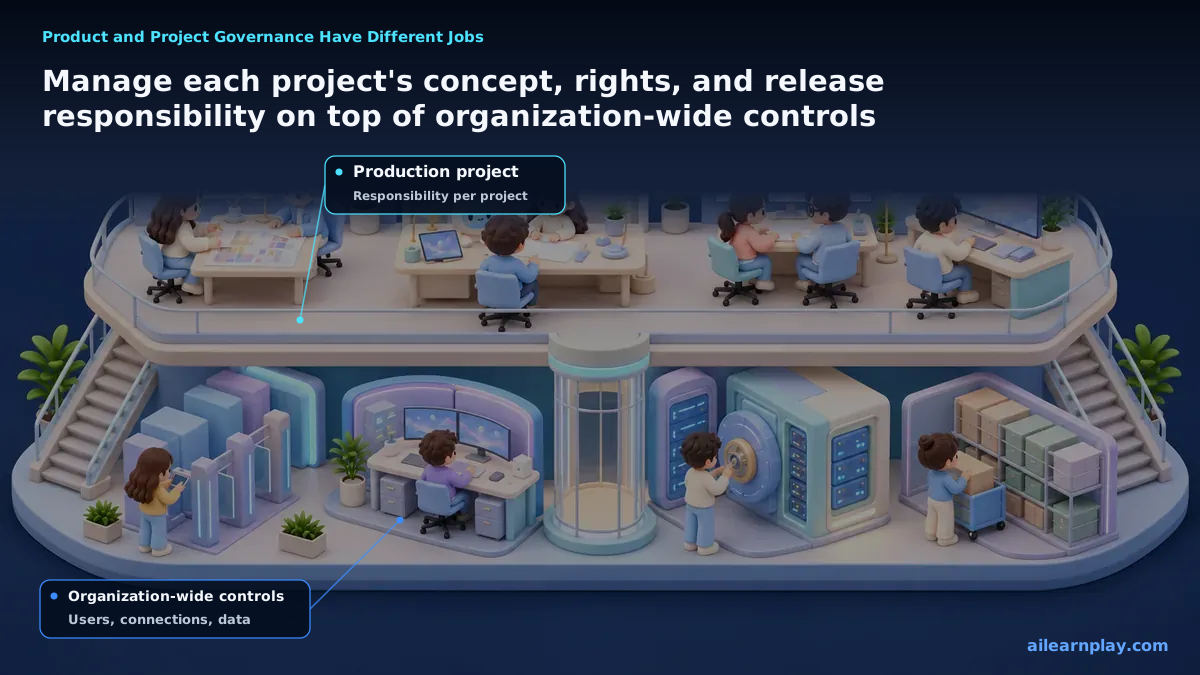
A production project still needs separate decisions about who owns the concept, which script is approved, who checks asset rights, and who releases the final video.
| AI product administration | Production project management |
|---|---|
| Who may use the AI | Who approves the concept, script, assets, and release |
| Which features and connections are allowed | Which AI services and assets may be used for this project |
| How data is stored and retained | Where scripts, assets, reasons, and approvals are recorded |
| How organization-wide use is monitored | How quality, rights, and cost are checked for one project |
Neither side replaces the other. Product administration provides the foundation; production rules define how a particular piece of work moves across that foundation.
Move the Shared Rules, Not Just the Tools, into an Organization
An organization can use the OpenMontage ideas without adopting the same product. ChatGPT, Gemini, internal systems, and specialist image or video services can coexist when the team uses shared production rules and records.
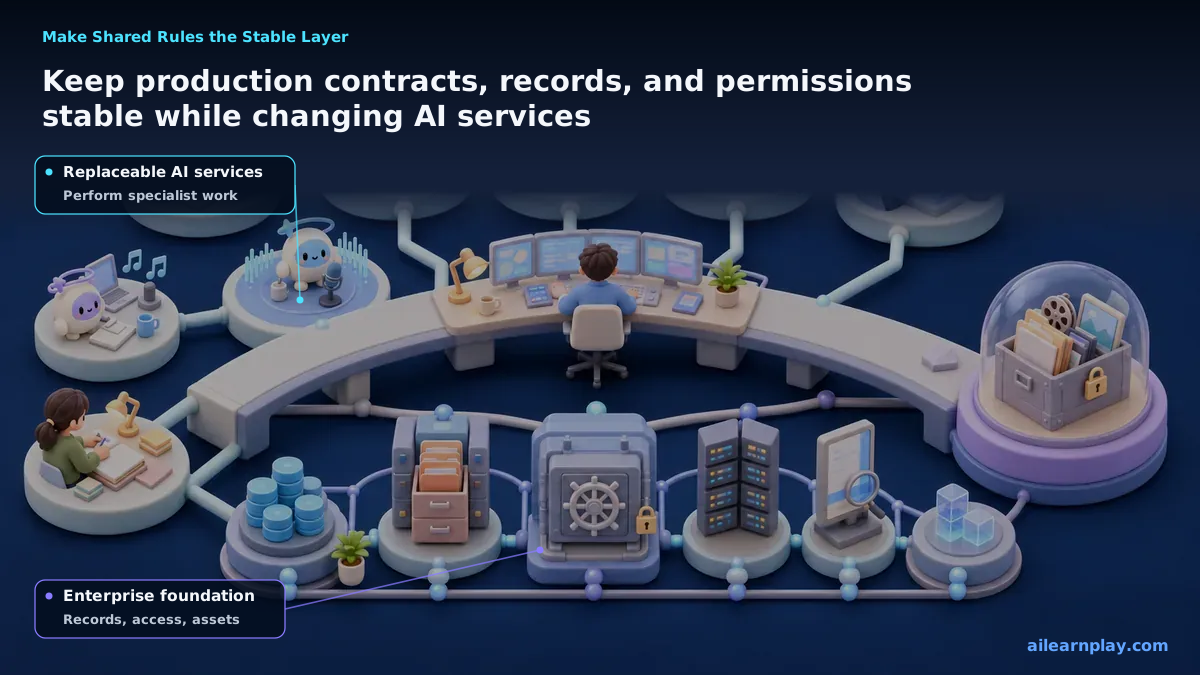
The diagram has three areas. The top contains the AI services that perform work. The middle contains production rules shared across those services. The bottom contains existing systems for assets, projects, access, and records. The key is to keep the middle and bottom stable even when an AI service changes.
An AI Video Production Worksheet Defines Purpose, Rights, Approval, and Records
There is no need to build a new system first. Start by answering these questions for one project in a meeting document or project management tool.
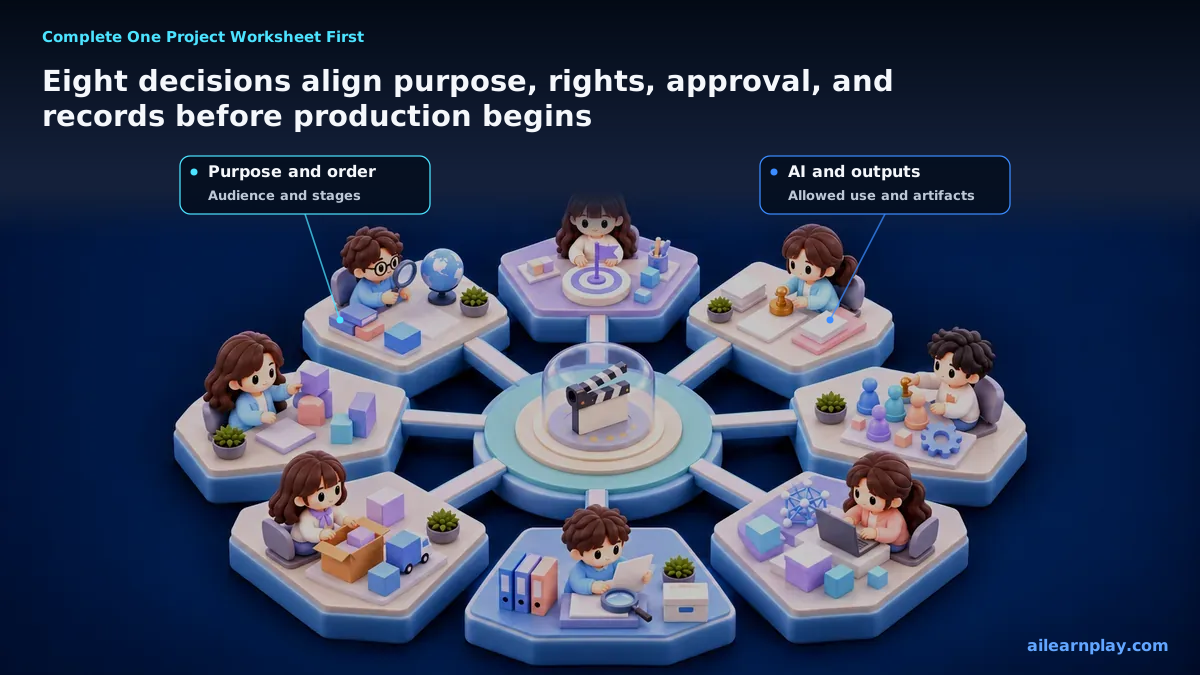
| Area | Question to answer | Minimum record |
|---|---|---|
| 1. Purpose | Who is the video for, what should it communicate, and what should happen next? | Approved concept note |
| 2. Order | Which stages lead from concept to release? | Shared production plan |
| 3. AI services | Which AI and specialist services may be used? | Service and account type |
| 4. Intermediate work | What must exist before each stage can finish? | Script, scene plan, asset list, and final version |
| 5. Decisions | Which option was selected, and why? | Options, selection, reason, and change history |
| 6. Approvals | Who reviews what, and at which point? | Reviewer, item, outcome, and time |
| 7. Quality | How are facts, brand, rights, and accessibility checked? | Automated checks and human review |
| 8. Cost and asset origin | What did the work cost, and where did each asset come from? | Estimate, actual cost, model, source, and terms |
For a product video, the first line might be “Explain a new feature to existing customers in 60 seconds.” The team can then name the reviewers for concept, script, assets, and release. Those two steps are enough to begin separating work from decisions, even in a small pilot that uses only ChatGPT or Gemini.
Pilot a Shared Format on a Representative Project
The production model can expand in four steps.
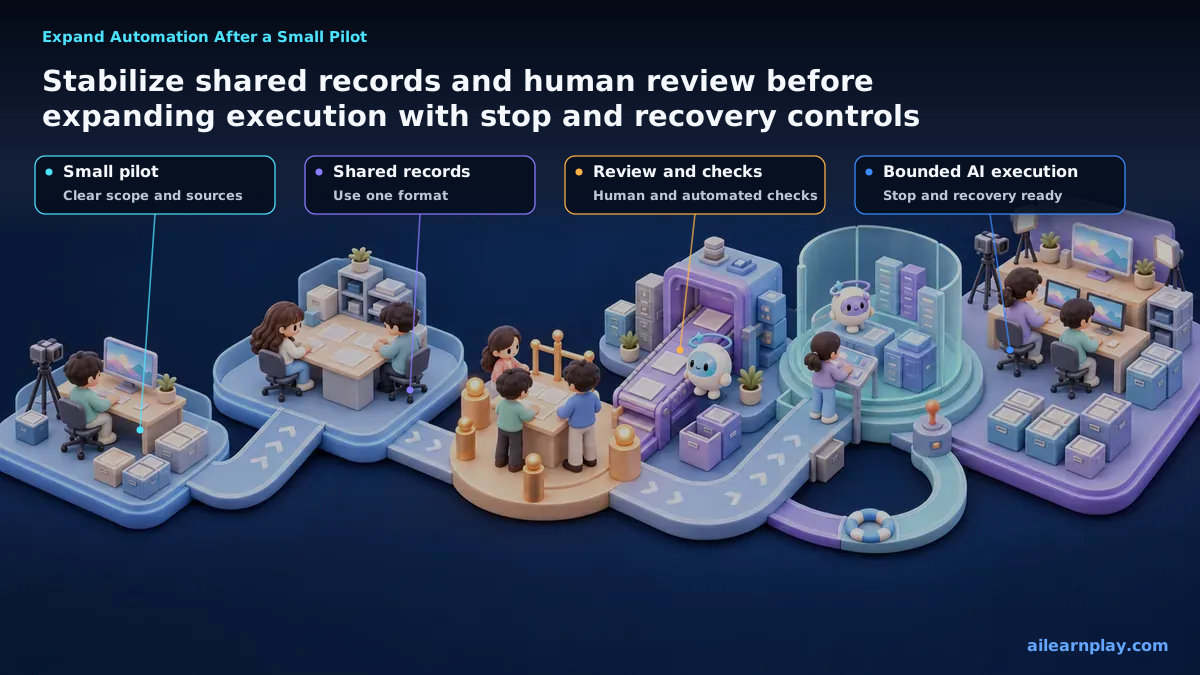
- Create shared records: Use the same format for the concept, script, asset list, and final review
- Choose human review points: Name the owners for concept, script, assets, and release
- Automate format checks: Check required fields, links, video dimensions, and spending limits
- Allow limited AI execution: Expand automated work only after stop conditions, permissions, and recovery are clear
A suitable first project has limited distribution, clear source material and rights, and an output that a person can review quickly.
Before Adoption, Check Environment, Human Judgment, Records, Recovery, and License
OpenMontage is useful as a design reference, but downloading the publicly available software does not create a complete production operation.
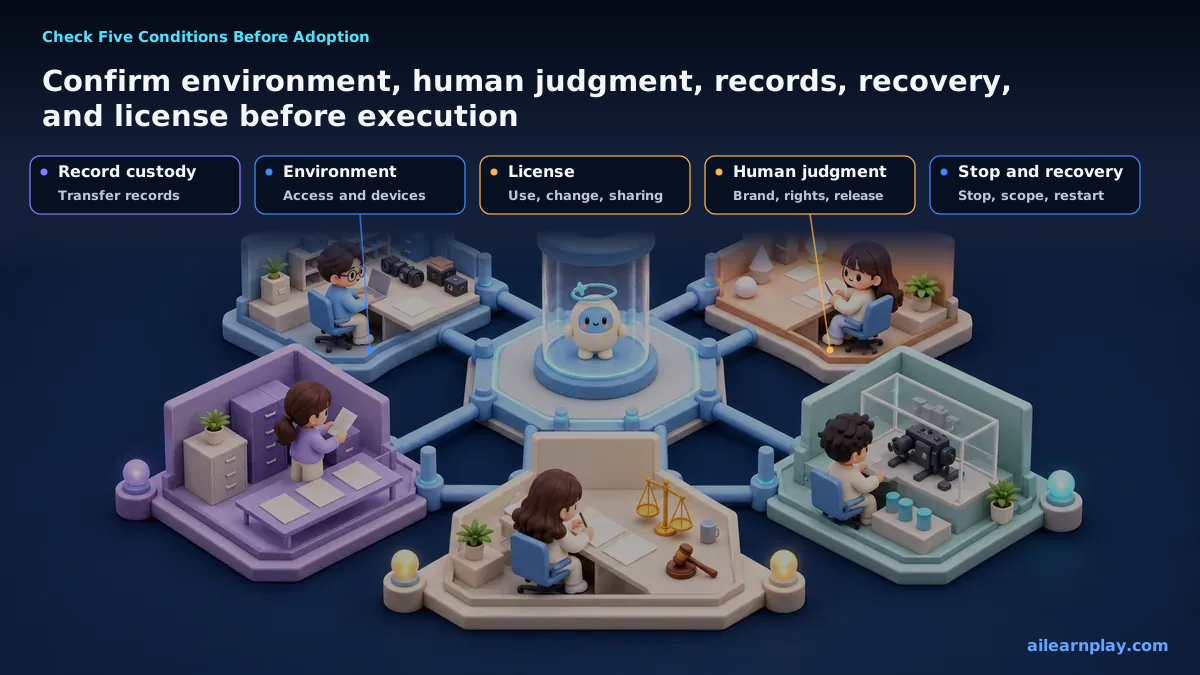
- Operating environment: The contracts for planned AI services, whether company systems can connect to them, region, and computer capacity affect which features can run. Confirm these points with the IT team or service provider
- Human judgment: Automated checks can find format problems, but people remain responsible for brand, cultural context, rights, and release decisions
- Record storage: A team must decide how production records saved on an operator’s computer move into company project and asset systems
- Stopping and recovery: Before AI performs work, define how to stop it, which permissions it has, and how work resumes after failure
- License: OpenMontage is published under GNU AGPLv3, a software license that sets conditions for use, modification, and some forms of distribution.[10] Explain the planned use to legal and IT teams and confirm the required steps
Summary: Start Governing AI Video Production with the Eight-Part OpenMontage Worksheet
The main OpenMontage lesson is not the number of AI video features. It is the decision to divide production into an order of work, intermediate outputs, human approvals, and decision records. AI can coordinate the flow while people make consequential decisions and preserve the reasons behind them.
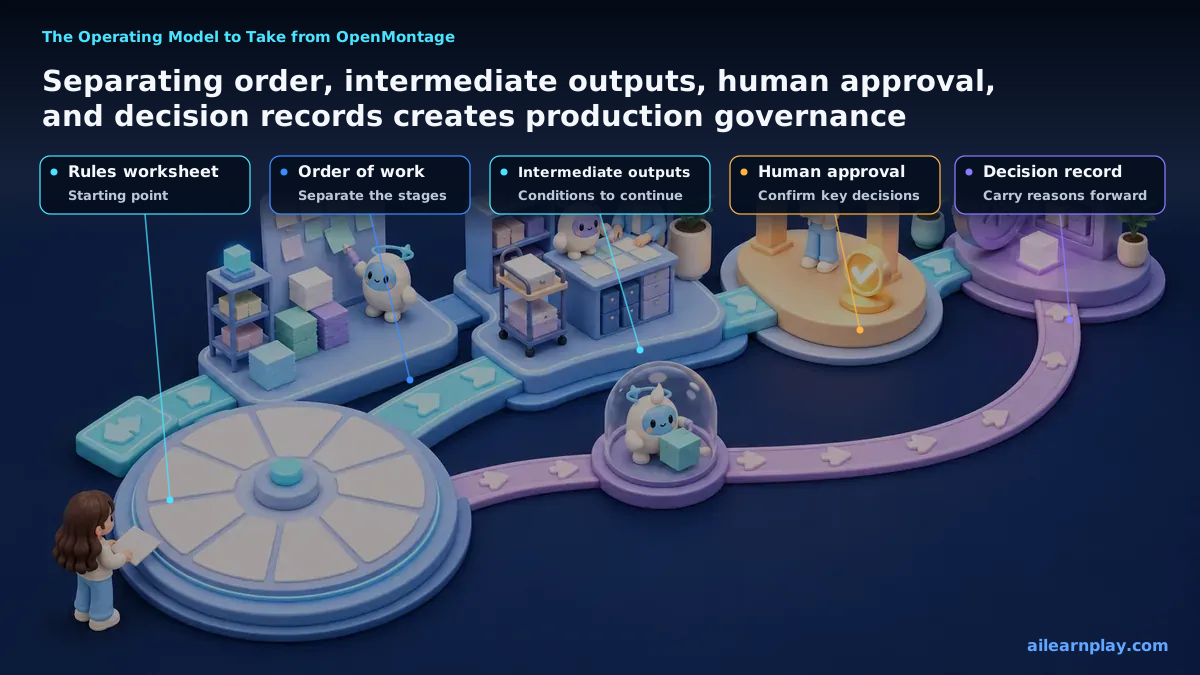
To try the model, I recommend starting by reviewing the eight-part worksheet. Deciding who reviews the concept, script, assets, and release lets a team design a production flow that accounts for what to delegate to AI and where people review and approve the work.
This article is a general information summary and is not legal advice. Confirm practical decisions with a qualified specialist.
References
- OpenMontage, README
- OpenMontage, OpenMontage Architecture, updated March 28, 2026
- OpenMontage, OpenMontage Agent Guide
- OpenMontage, Animated Explainer Pipeline Manifest
- OpenMontage, Checkpoint Runtime
- OpenAI, ChatGPT Enterprise admin quickstart, updated August 2026
- OpenAI, Enterprise privacy at OpenAI, updated January 8, 2026
- Google Workspace, Generative AI in Google Workspace Privacy Hub, updated May 26, 2026
- Google Workspace Admin Help, Turn the Gemini app on or off
- OpenMontage, GNU Affero General Public License v3.0, November 19, 2007
For the latest releases and updates, check the official website and official documentation.