

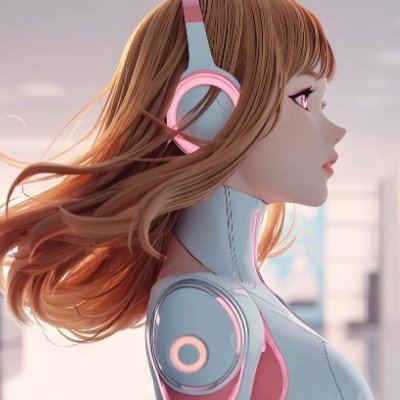
“Type a sentence and a photorealistic image appears” — this is what image generation AI delivers. OpenAI’s image generation API is one example of text-to-image technology exposed as a product/API.[1] This page explains a core technology behind modern image generation AI: the diffusion model.
A Brief History of Image Generation AI
Several approaches preceded today’s dominant technology (diffusion models).
timeline
    title Evolution of Image Generation Technology
    2014 : GAN (Generative Adversarial Networks) introduced
    2020 : Denoising Diffusion Probabilistic Models formalize a key diffusion approach
    2021 : DALL-E demonstrates text-to-image generation
    2022 : Latent Diffusion / Stable Diffusion popularizes latent-space generation
    2020s : Text-to-image APIs and creative tools become widely available
Diffusion Models: The Core Technology
Many modern image generation systems are based on diffusion models. Denoising Diffusion Probabilistic Models describe learning a reverse denoising process, and Latent Diffusion applies diffusion in a compressed latent space for efficient high-resolution image synthesis.[2][3]
The intuition
A diffusion model learns to remove noise. The insight is simple:
graph LR
    subgraph Forward["Training: Adding noise (forward process)"]
        I["Clean image"] --> N1["Slightly noisy image"] --> N2["More noise"] --> N3["Pure noise (random)"]
    end
    subgraph Reverse["Generation: Removing noise (reverse process)"]
        R3["Pure noise (random)"] --> R2["Slightly cleaner"] --> R1["Clearer still"] --> R0["Finished image"]
end- Training (forward): Add noise to real images in stages, teaching the model what noisy versions look like
- Generation (reverse): Starting from random noise, gradually remove noise to synthesize an image
Think of it like a snowstorm on a TV screen that slowly clears to reveal a picture.
How text guides the image
A text prompt is converted to a vector using a text encoder. This vector conditions the denoising process, steering generation toward the described content.[3]
graph TD
    Text["'A landscape with blue sky and white clouds'"] --> CLIP["CLIP / text encoder\n(text → vector)"]
    Noise["Random noise"] --> Diffusion["Diffusion model (U-Net)\nconditioned on text vector"]
    CLIP --> Diffusion
    Diffusion --> Image["Finished image"]
How to Compare Image Generation Tools
Tools such as OpenAI image generation, Midjourney, Stable Diffusion-based workflows, Adobe Firefly, and Google image generation products change model names, interfaces, terms, and output limits over time. For current product specs and commercial terms, check the provider’s official documentation and terms before use.[1]
| Dimension | What to check |
|---|---|
| Input modes | Text-to-image, image-to-image, inpainting, outpainting |
| Output controls | Aspect ratio, style controls, seed/reproducibility, editing controls |
| Rights and terms | Commercial use, training-data claims, content policy, disclosure rules |
| Workflow fit | API, desktop app, browser tool, local workflow, team review |
Key Features of Image Generation AI
Text-to-Image
Generate images from text prompts. The fundamental capability.
Image-to-Image
Combine a reference image with a prompt to transform the style or content of an existing image.
Inpainting
Rewrite only a specific region of an image — for example, “change just the sky to a sunset.”
Outpainting
Extend an image beyond its original borders — useful for turning a portrait-format photo into landscape.
ControlNet
Use skeletons, edge maps, or depth maps to control pose and composition in generated images. This is an additional conditioning approach used in some diffusion workflows.
Tips for Effective Prompts
Building a good prompt
[Subject description] + [Style] + [Composition] + [Lighting] + [Output constraints]

Example:
"Cyberpunk city at night, neon lighting, rain, bird's-eye view,
photorealistic, cinematic lighting"
Negative prompts
Specify what you don’t want to improve quality. Effective with Flux-based models and ComfyUI workflows.
Example negative prompt:
"blurry, low quality, distorted, text, watermark, extra fingers, unnatural skin"
Ethics and Copyright Considerations
- Copyright: Commercial use terms vary by service; always check the current terms before using generated images commercially
- Training data: Debate continues over whether artists’ works were used in training without consent
- Fake images: Generating realistic fake images of real individuals can raise legal and ethical issues
- Copyrightability: The U.S. Copyright Office has stated that copyright protection requires sufficient human authorship, so purely machine-generated material raises copyrightability issues under U.S. practice.[4]
Summary
- Many modern image generation systems use diffusion models that learn a reverse denoising process
- Text is converted to a vector by a text encoder, which conditions the denoising process
- Product names, model versions, output limits, and commercial terms should be checked in official documentation
- Copyright, training data ethics, and deepfakes are ongoing social and legal concerns
Frequently Asked Questions
Q: Does writing “high quality” or resolution words in a prompt actually improve the image?
A: It can influence style because the model responds to learned text-image associations, but actual output resolution is controlled by model and product settings, not by prompt words alone.
Q: Who owns the copyright on AI-generated images?
A: It varies by jurisdiction and by the amount of human authorship involved. Under U.S. Copyright Office guidance, copyright protection requires human authorship, so purely machine-generated material may not be copyrightable.[4] Always check the relevant law and service terms before commercial use.
Q: Why do AI-generated hands sometimes have the wrong number of fingers?
A: Diffusion models learn statistical patterns from image data. Hands and fingers are structurally complex and appear in many poses, so precise geometry can be difficult, especially when the prompt demands unusual composition.
References
- OpenAI, Images and vision
- Jonathan Ho et al., Denoising Diffusion Probabilistic Models, June 19, 2020
- Robin Rombach et al., High-Resolution Image Synthesis with Latent Diffusion Models, December 20, 2021
- U.S. Copyright Office, Copyright and Artificial Intelligence, Part 2: Copyrightability, January 2025